Free delivery for all UK orders over £40
Aquamarine, with its soft blue and green tones, is often associated with the calm and clarity of the sea. As the March birthstone, aquamarine jewellery is a meaningful and elegant choice, perfect for celebrating birthdays, anniversaries and special occasions.
Whether you’re choosing a March birthstone gift or adding a fresh, luminous tone to your collection, aquamarine offers a beautifully refined and versatile style.
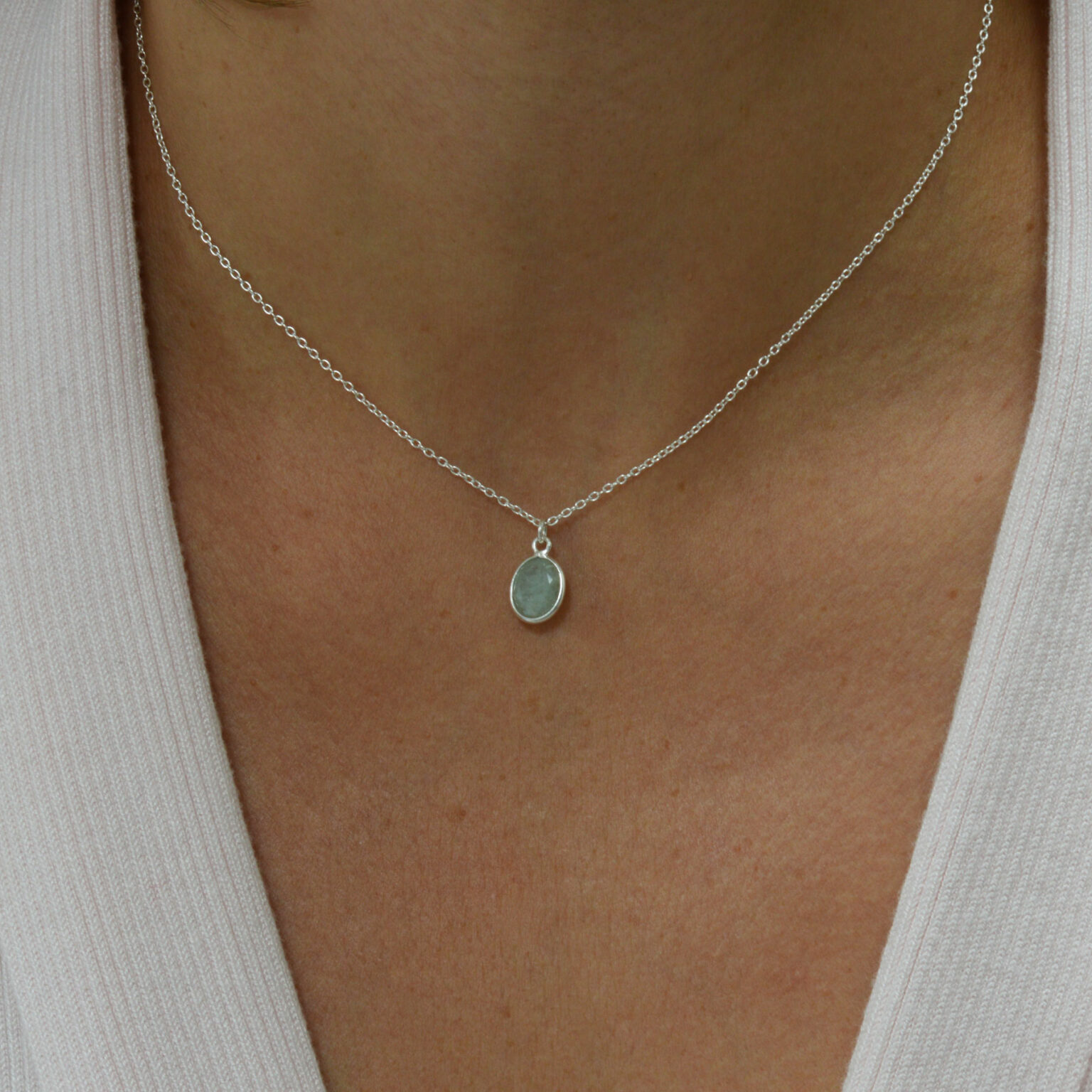
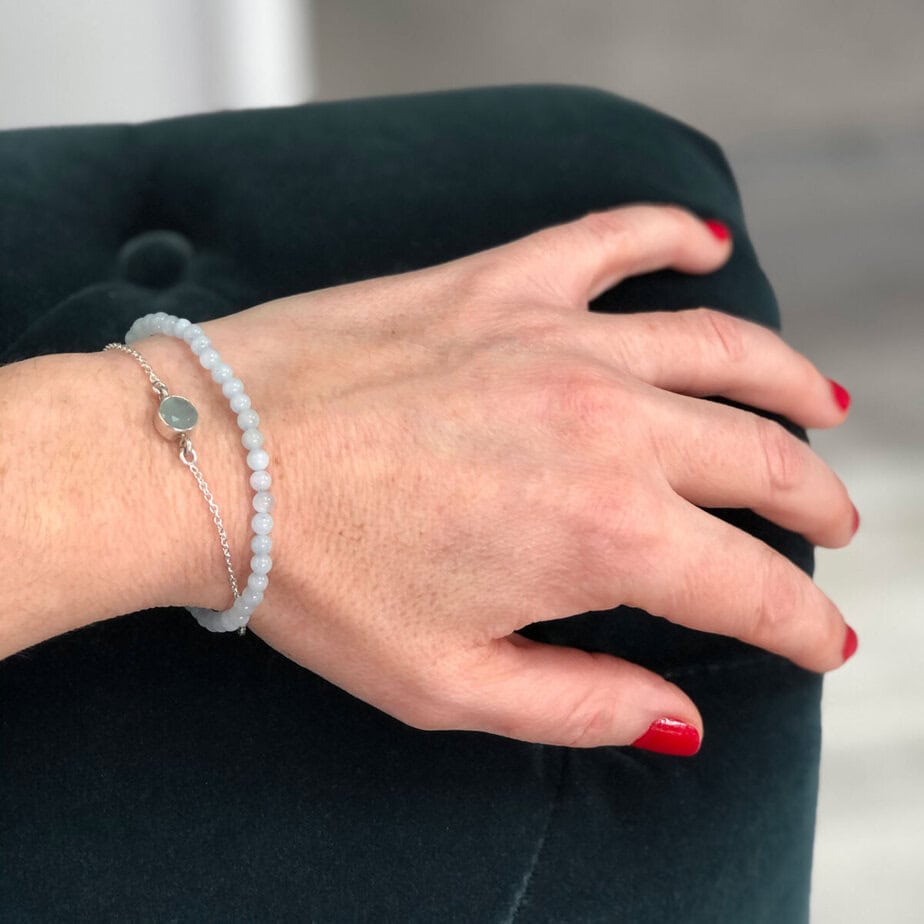
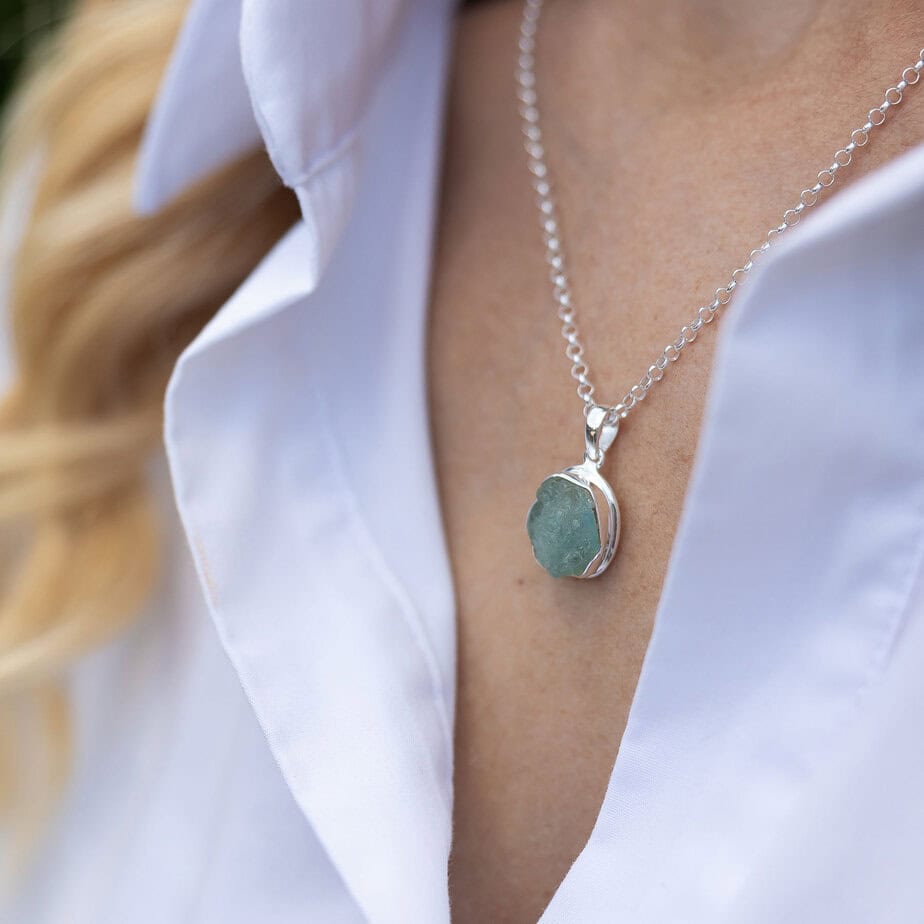
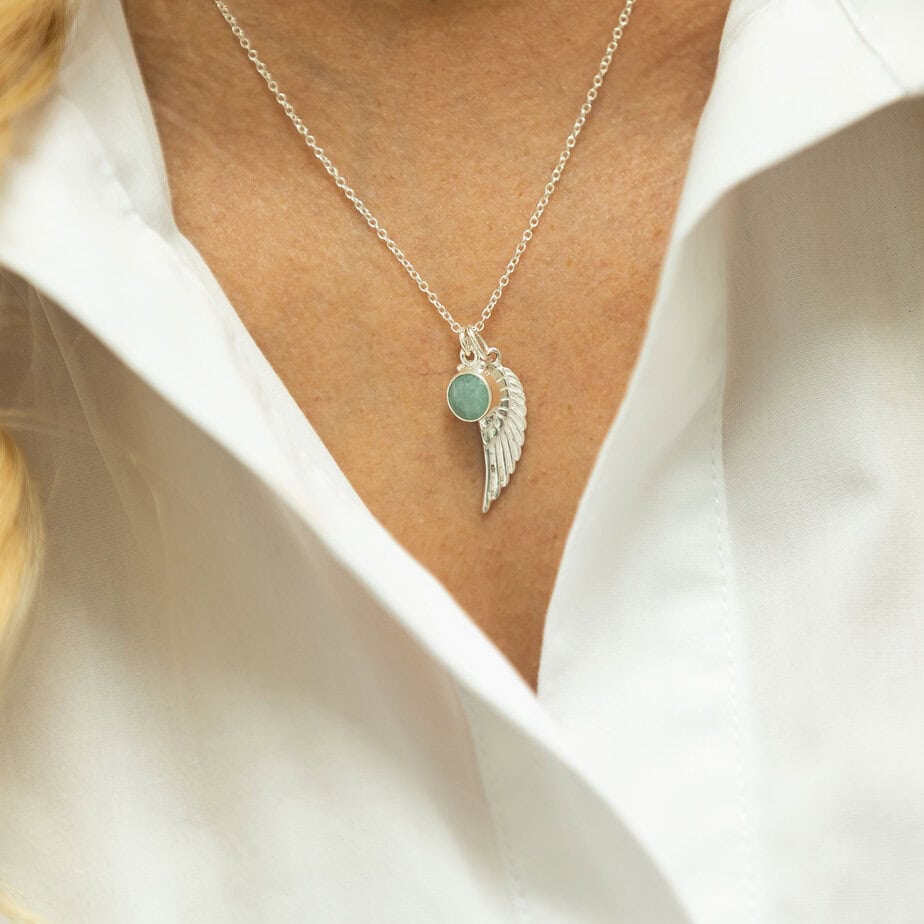
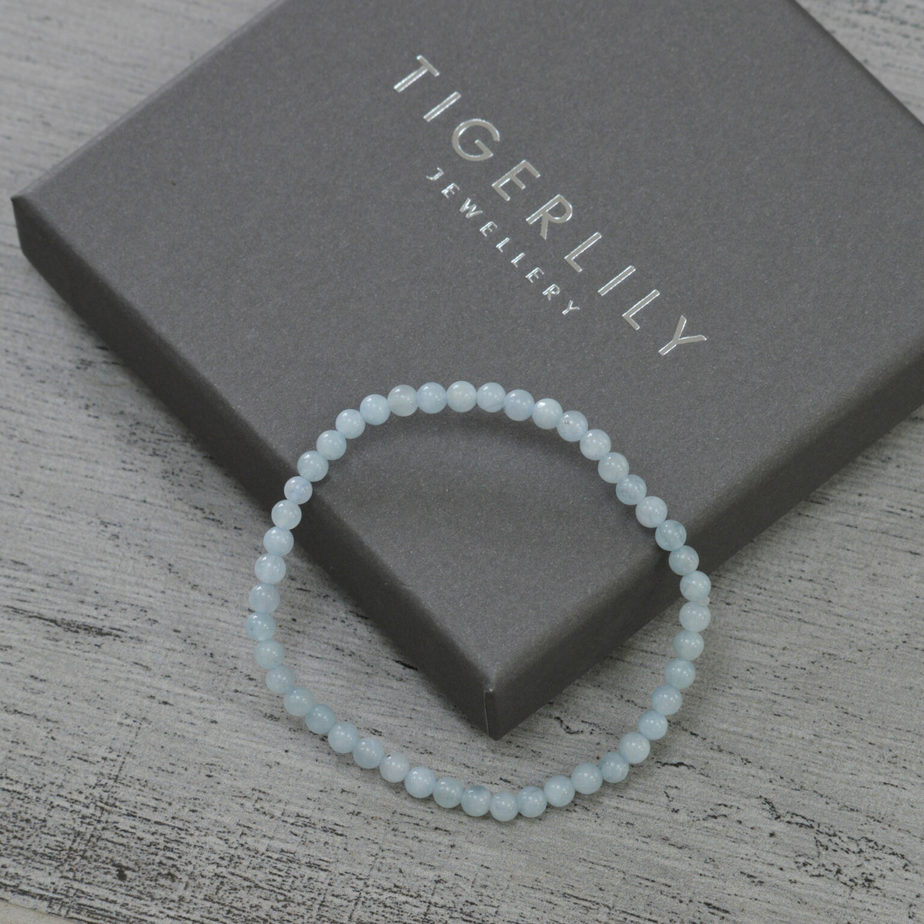
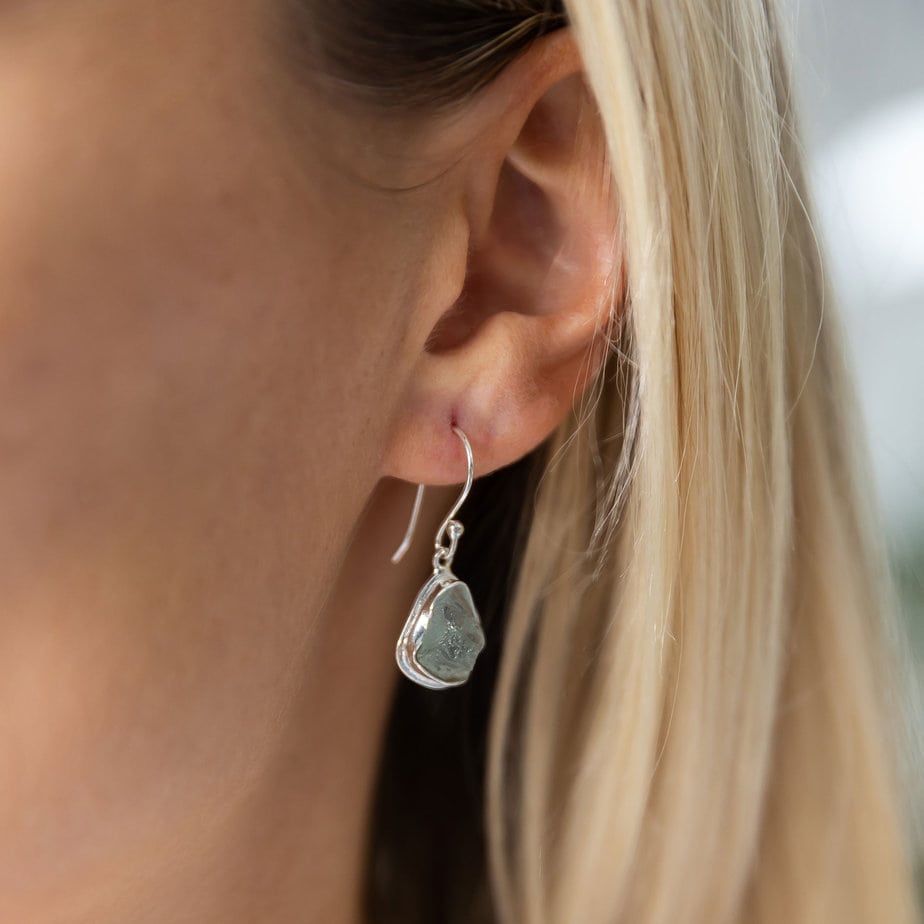
Our aquamarine jewellery collection includes earrings, necklaces and bracelets designed for both everyday wear and thoughtful gifting.


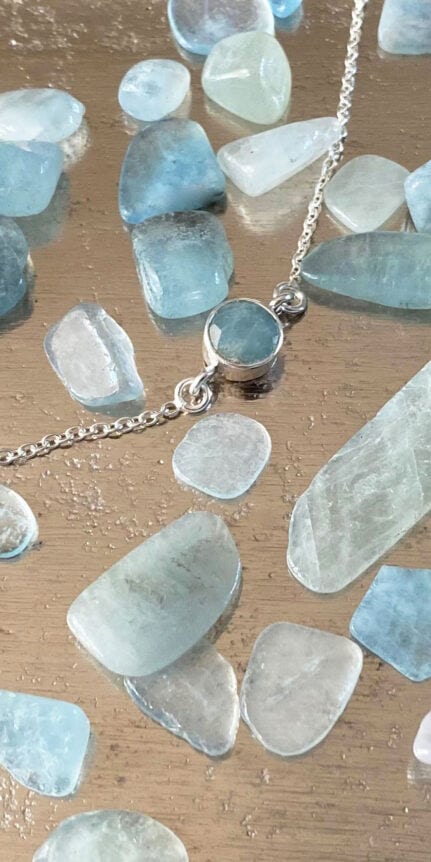
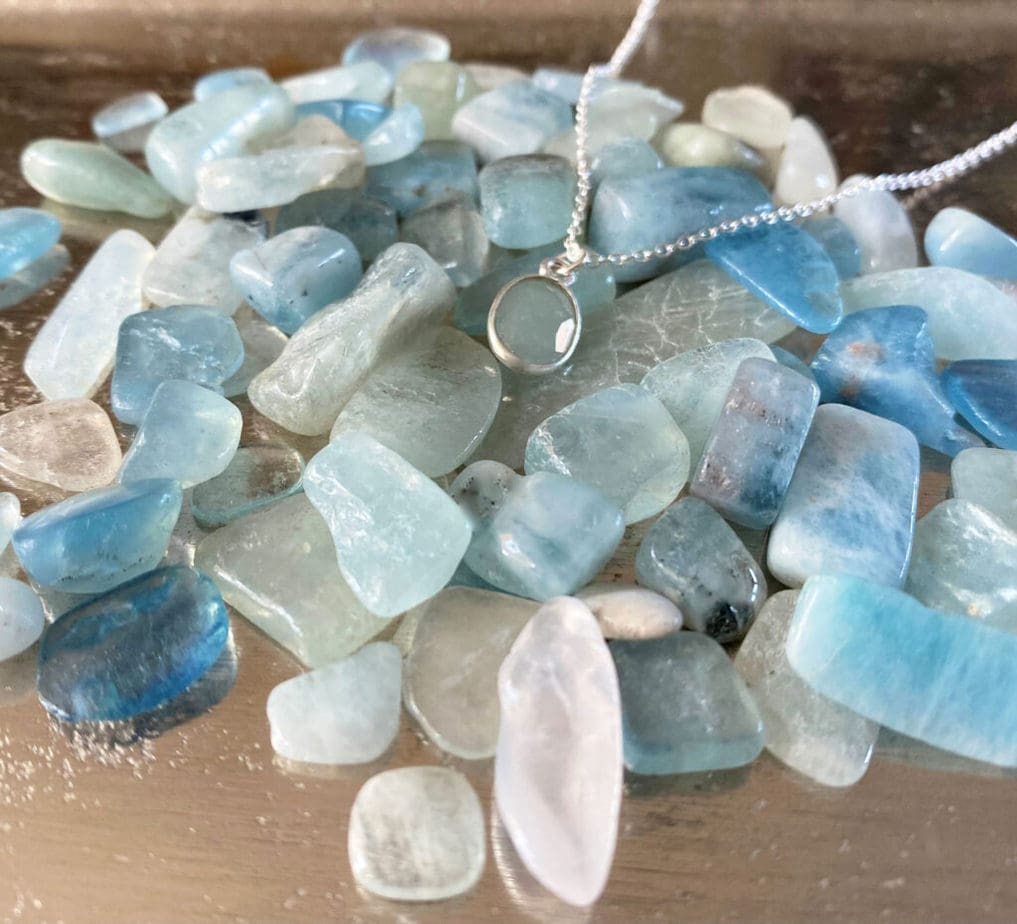
Aquamarine belongs to the beryl family of gemstones, the same mineral group as emerald. It ranges in colour from delicate greenish-blue tones to clear, pure blue, with variations in depth depending on the amount of iron within the stone.
Highly valued for its clarity and light-reflecting qualities, aquamarine is often paired with sterling silver or white gold, enhancing its cool, luminous tones. The result is a gemstone that feels equally suited to summer styling or a more refined, cool-toned look for evening wear.
Aquamarine has long been associated with calm, balance and emotional clarity. Historically, it was believed to bring protection, particularly for travellers at sea, and to promote harmony in relationships.
In medieval times, aquamarine was thought to enhance the happiness of marriage, and it continues to be linked with love, spirituality and a sense of calm.
Aquamarine ranks between 7.5 and 8 on the Mohs hardness scale, making it one of the more scratch-resistant gemstones and suitable for everyday jewellery with a little care. To keep your aquamarine jewellery looking its best:
– Clean with a soft cloth and mild soapy water
– Avoid heavy impact, as the stone can be brittle
– Store separately from harder gemstones
As well as being the March birthstone, aquamarine is traditionally given to celebrate a 19th wedding anniversary. In Buddhism, it’s the traditional gift from a husband to his wife the day after their wedding. Today, it’s seen as a stone of love, protection and spirituality. Its fresh colour and symbolic meaning make it a thoughtful and distinctive gift for many occasions.

The name “aquamarine” comes from the Latin for seawater, reflecting its ocean-like colour. Ancient mariners believed the gemstone could calm waves and protect sailors at sea, and it has long been associated with safe travel and protection.
Its connection to the sea also gives aquamarine a symbolic link to clarity, renewal and relaxation – qualities that continue to make it a popular gemstone today.
Aquamarine has been used in jewellery for thousands of years, with a history rooted in ancient Greece and Rome. In the Middle Ages, it was even believed to protect against poisoning – a reflection of the value placed on gemstones at the time.
One of the most famous aquamarines is the Dom Pedro, the largest cut aquamarine in the world. Discovered in Brazil, the original crystal was nearly a metre long before it was accidentally dropped and broke into three pieces. The Dom Pedro, the largest, was then transformed into the striking obelisk now displayed at the Smithsonian Museum.
Aquamarine has also been favoured by royalty. Queen Elizabeth II owned a remarkable aquamarine parure (matching set), including a 1957-commissioned Garrard tiara to complement her existing aquamarine necklace and earrings. A brooch and bracelet were later added.
Aquamarine is a variety of beryl formed from beryllium aluminium silicate, with its colour created by traces of iron. It typically forms in long, prismatic crystals within igneous and metamorphic rocks.
Some of the most highly prized aquamarines come from Brazil, particularly the Minas Gerais region, although the stone is also found in countries such as Zambia, Madagascar, Nigeria, Australia, USA, Sri Lanka and Pakistan.
A particularly desirable variety is known as “Santa Maria” aquamarine, recognised for its deep, rich blue tone.