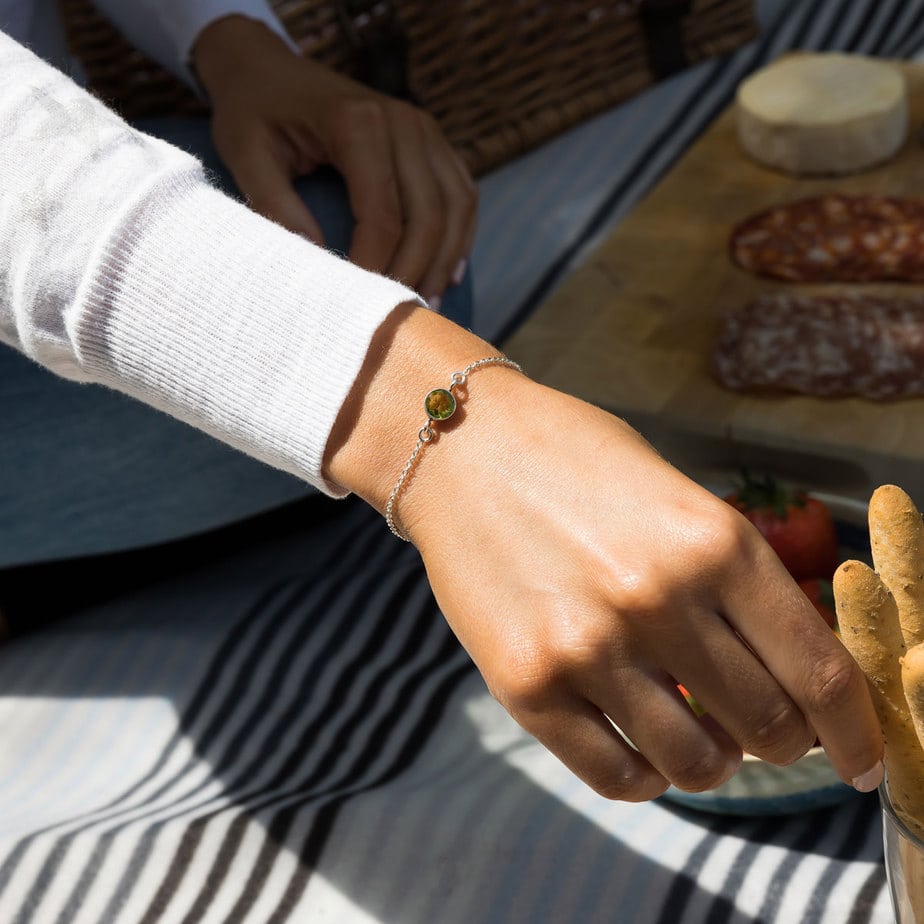
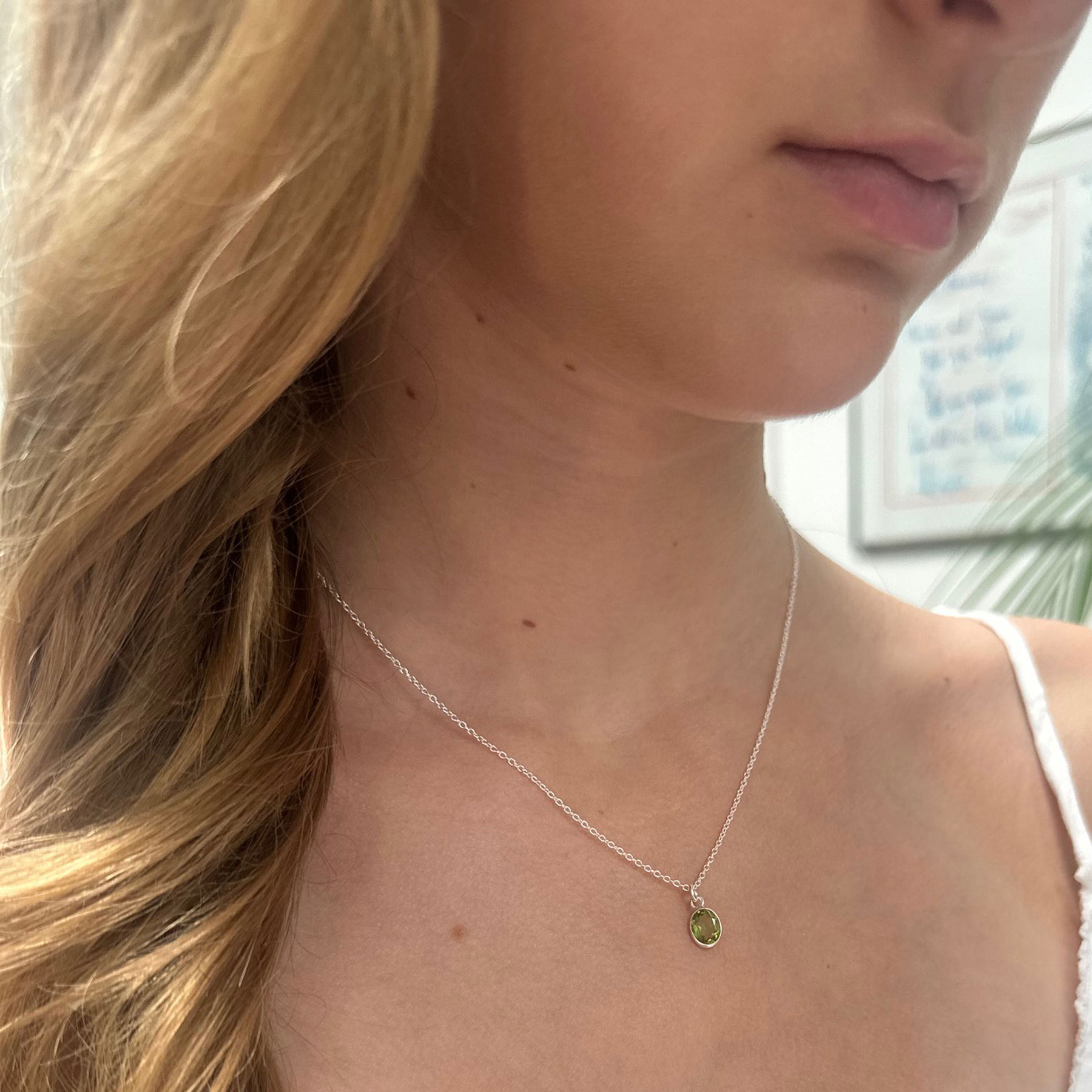
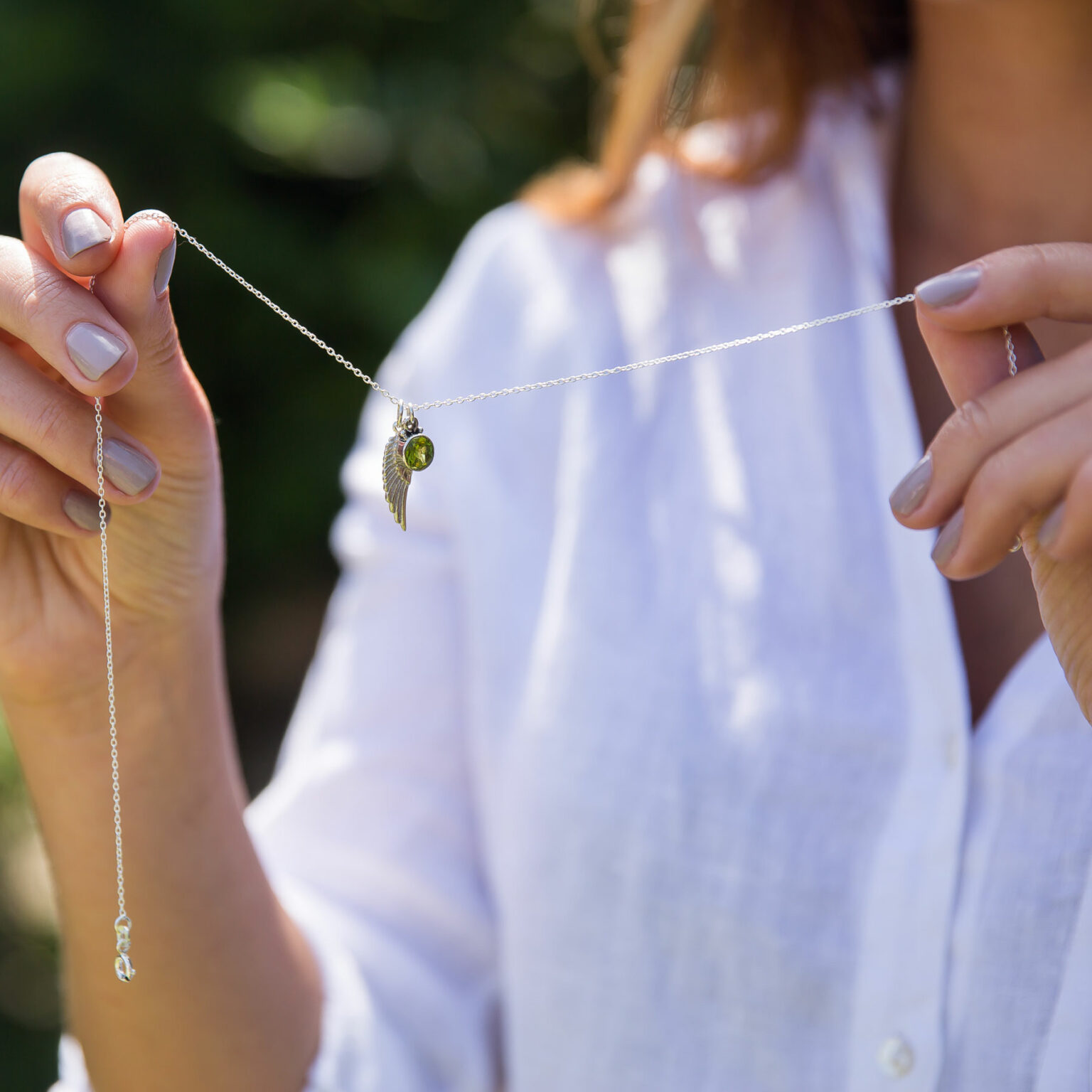
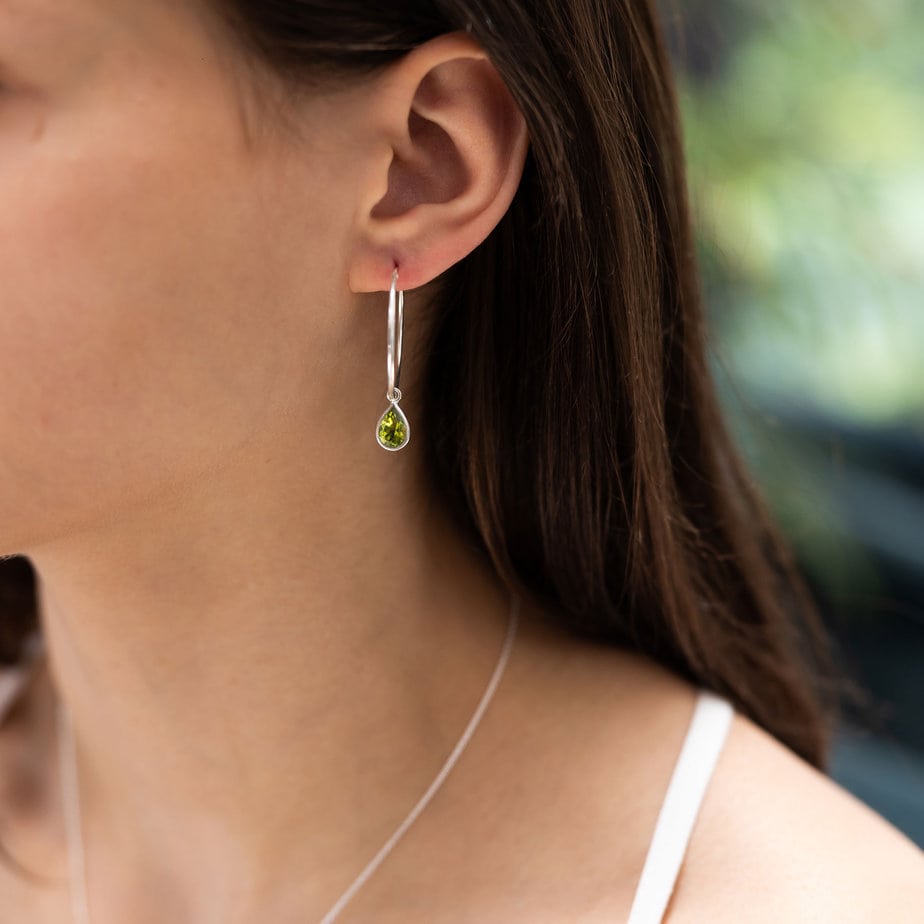
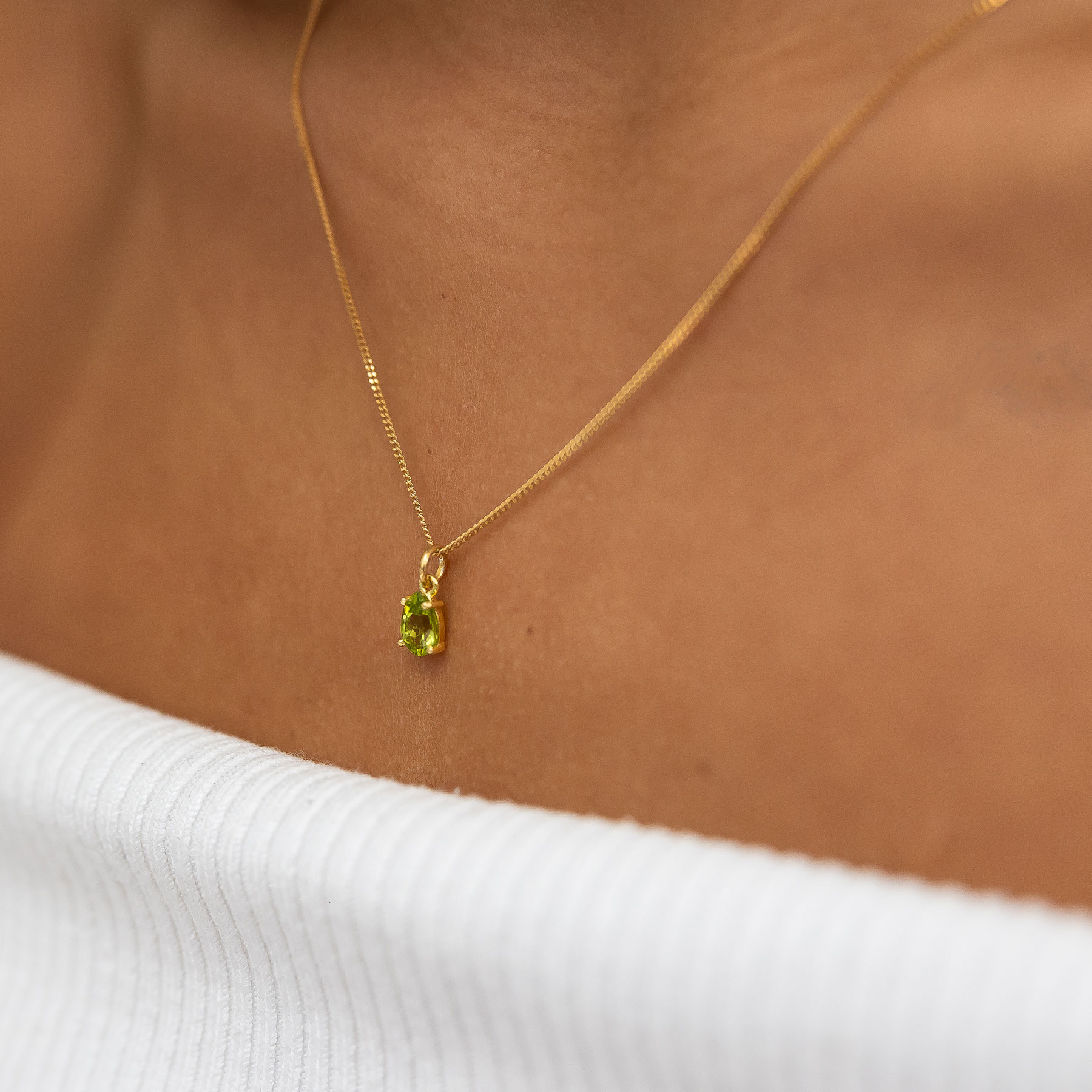
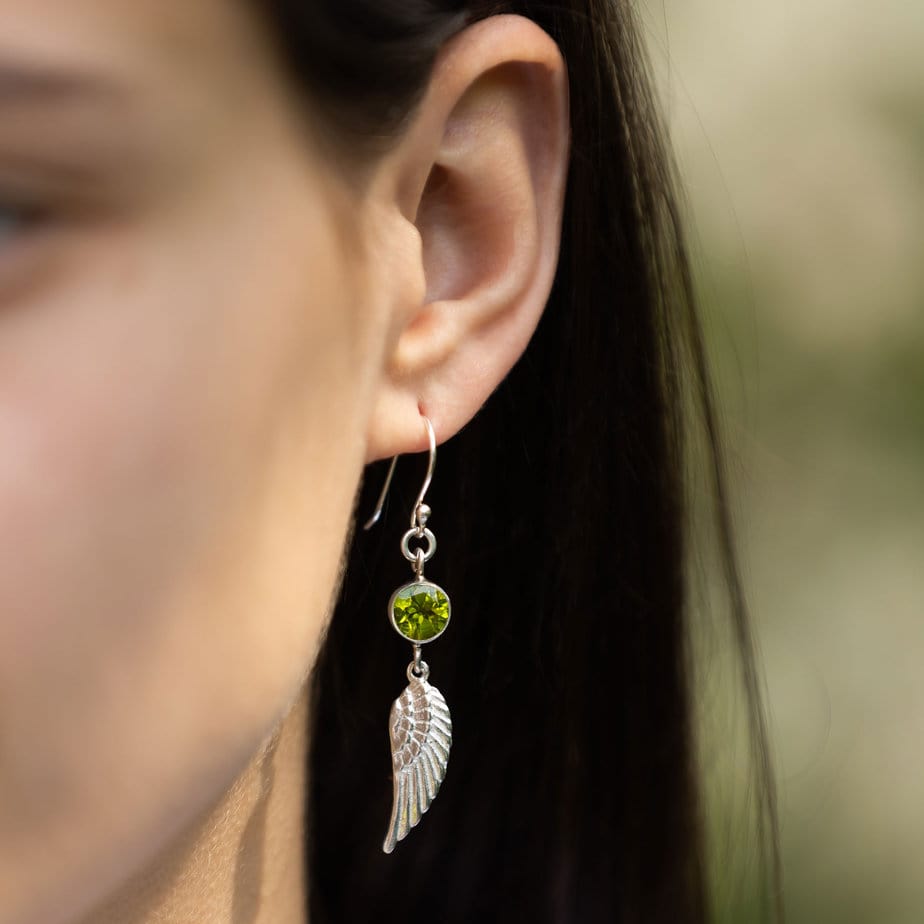
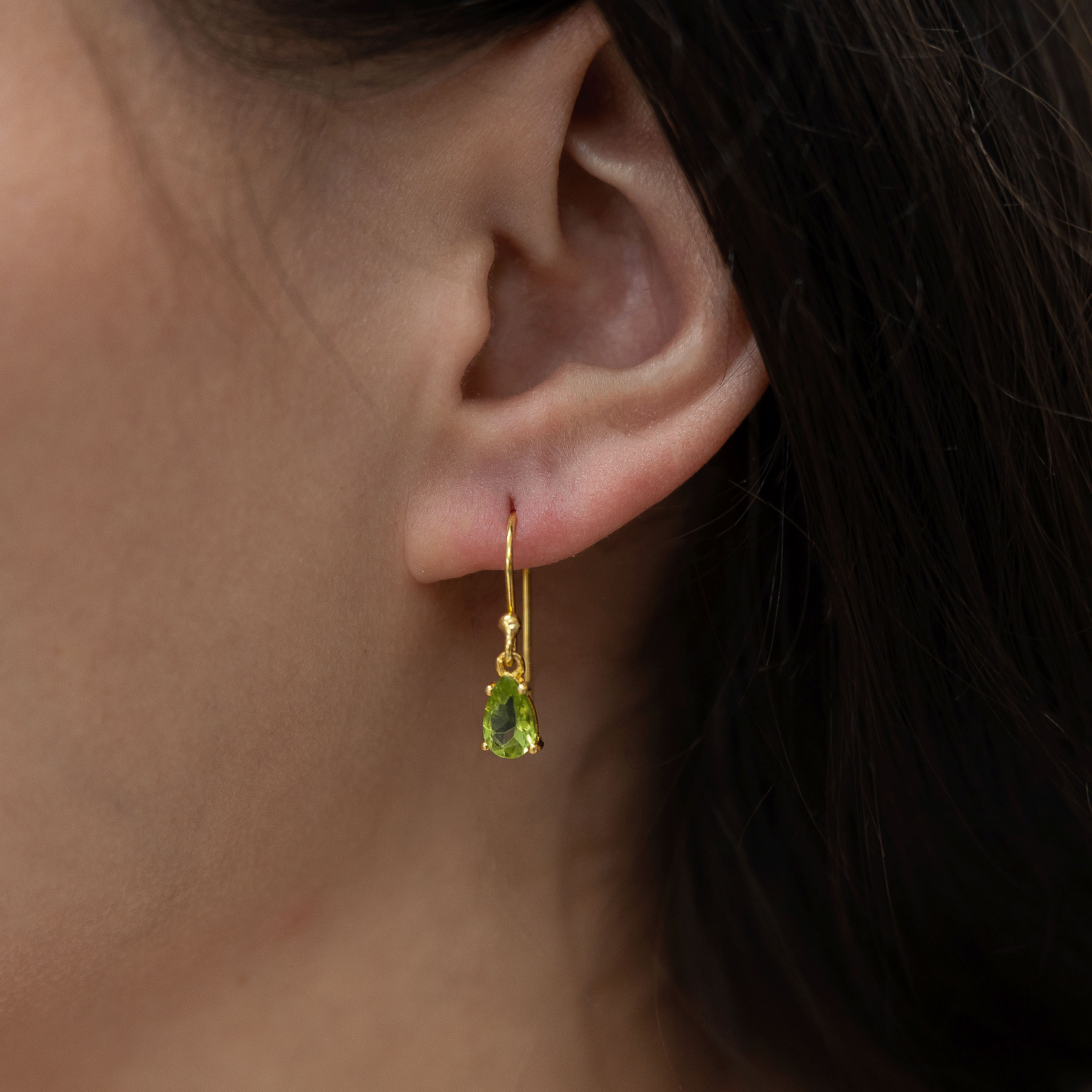
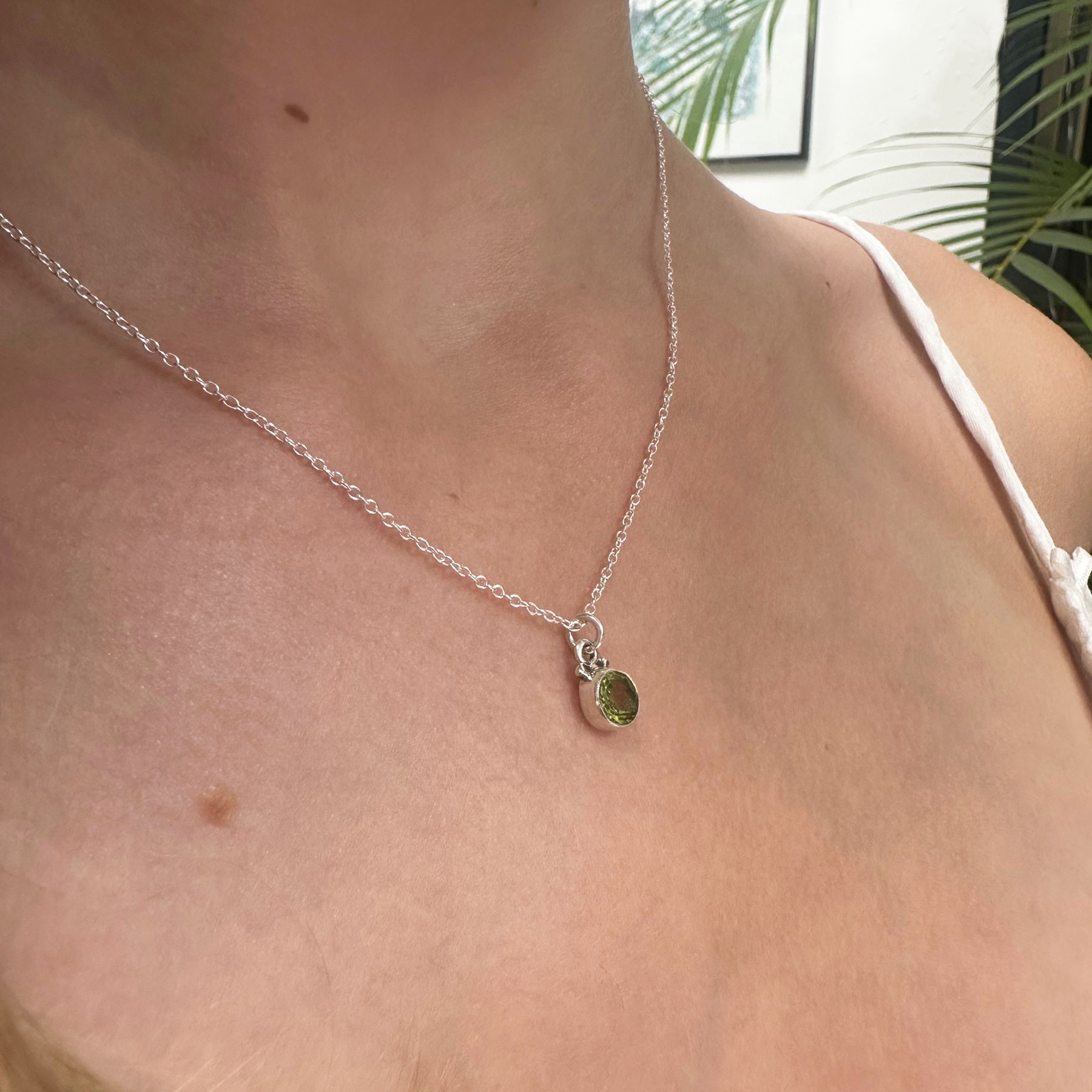
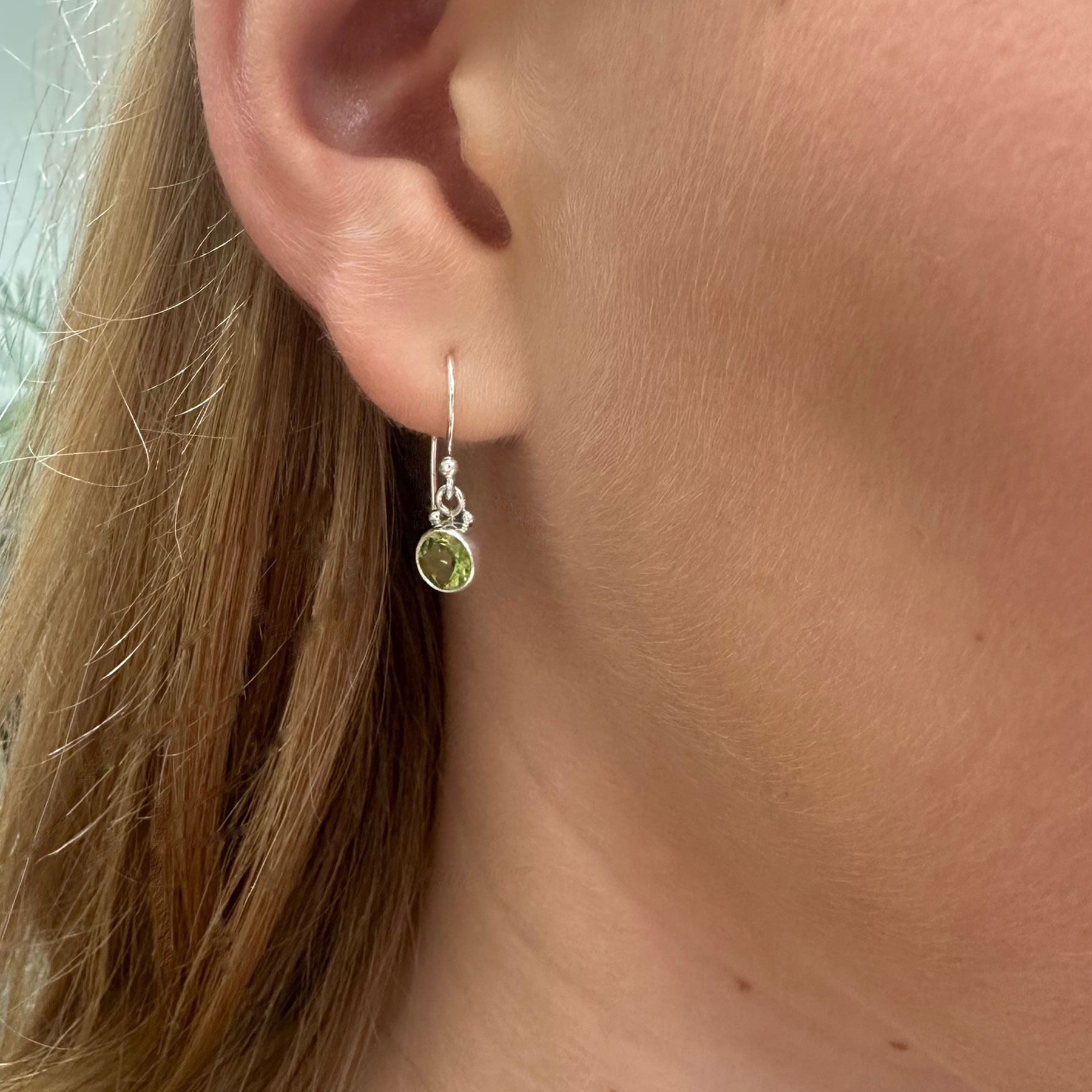
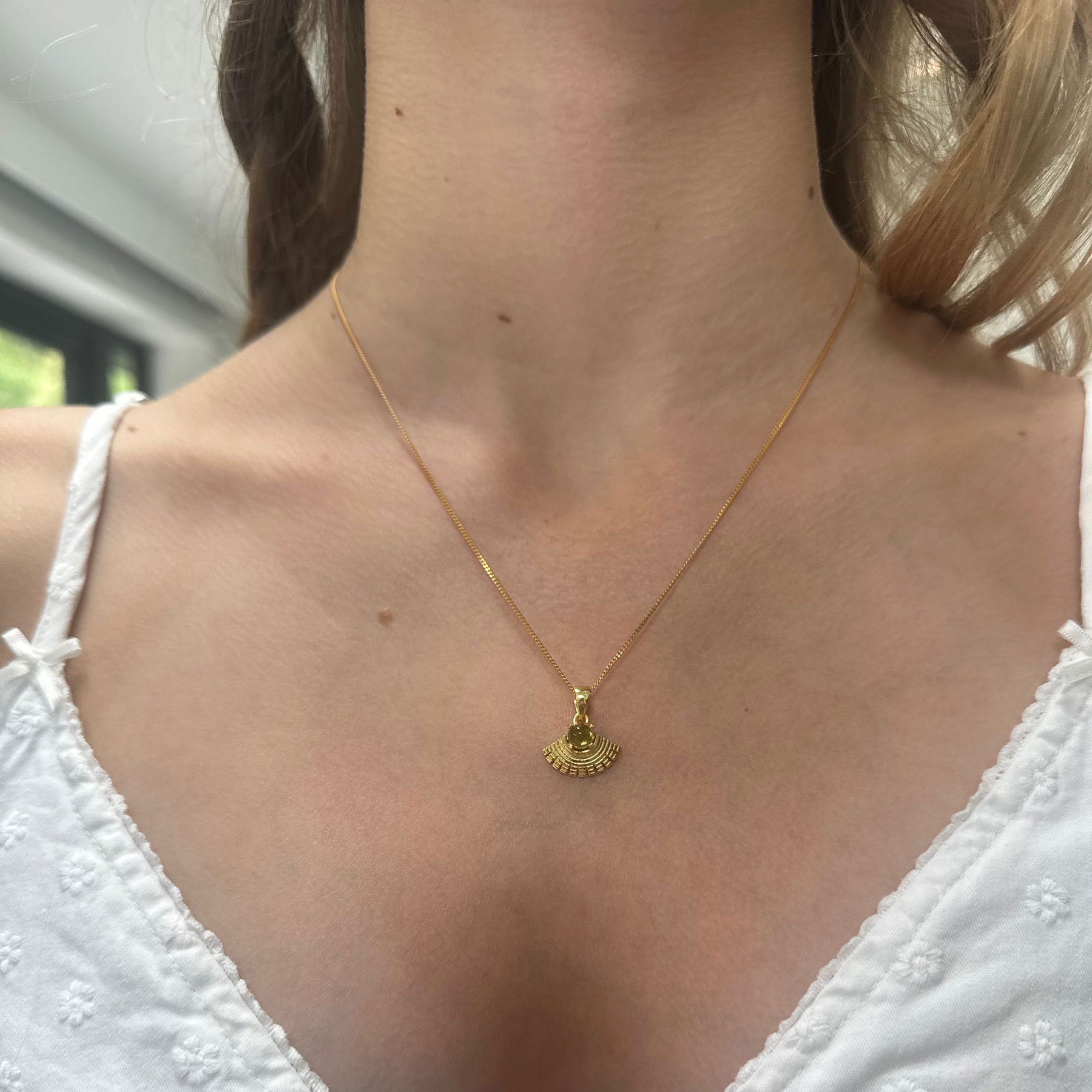
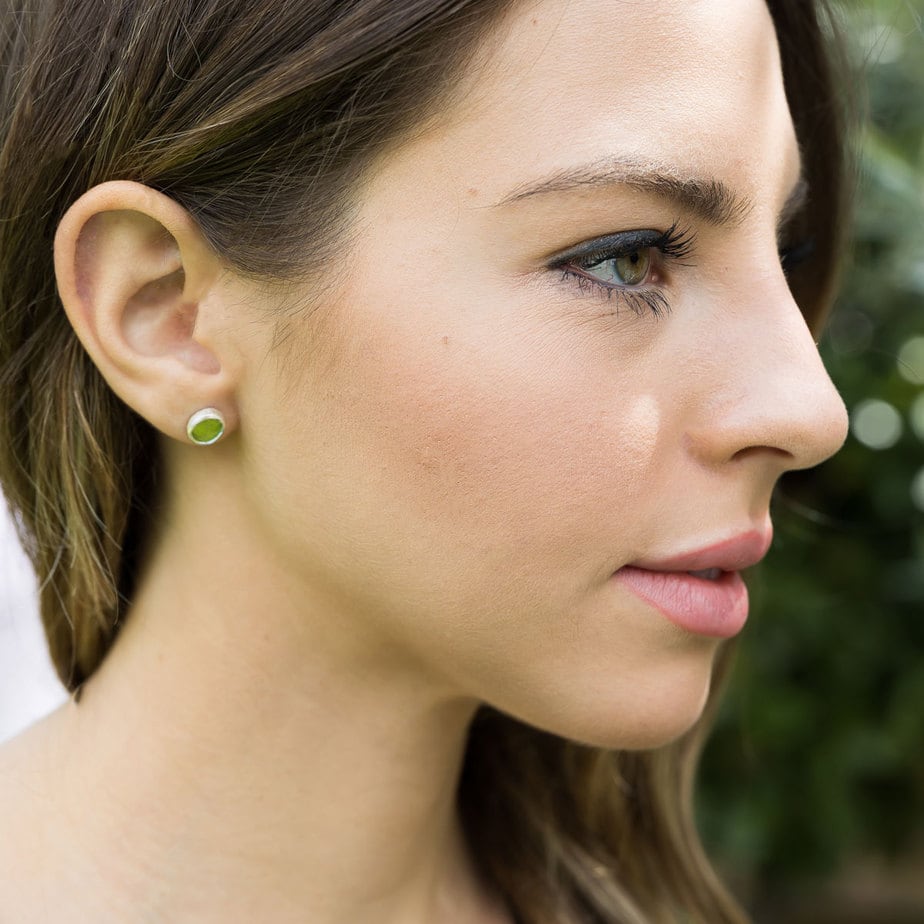
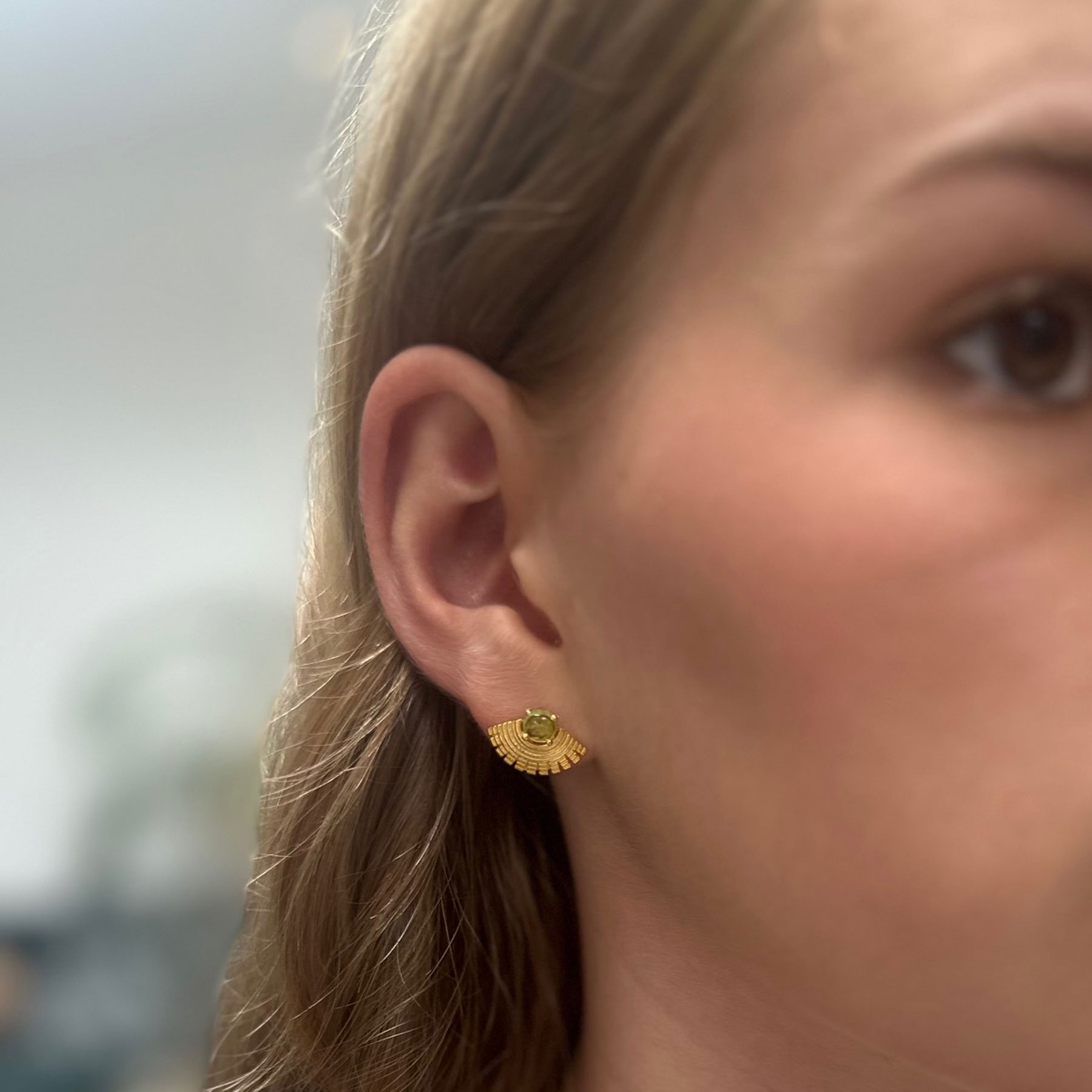
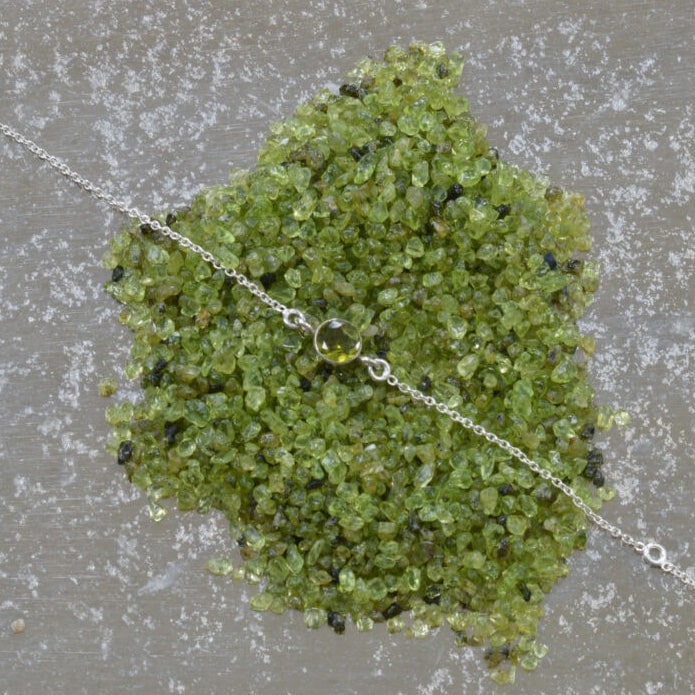
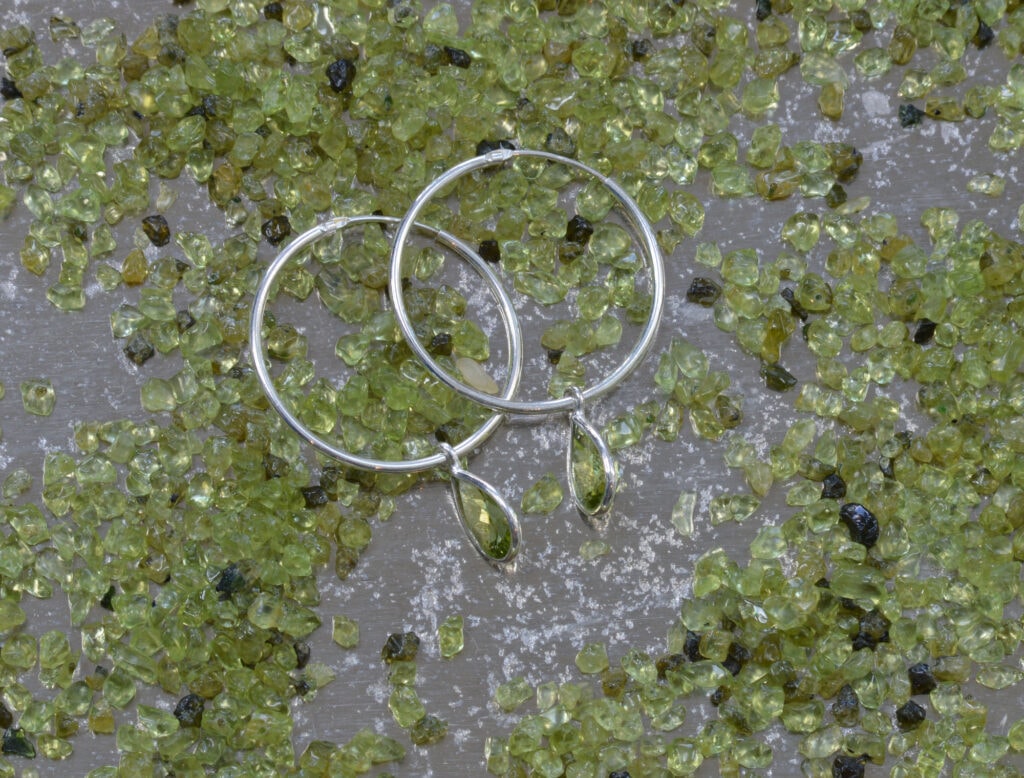
With its vivid green tones, peridot has long been associated with positivity, balance and renewal. As the August birthstone, peridot jewellery is a fresh and distinctive choice, perfect for celebrating birthdays, anniversaries and special occasions.
Whether you’re choosing an August birthstone gift or adding a pop of colour to your collection, peridot offers a unique and eye-catching style that feels both modern and timeless.
Peridot is one of the few gemstones found in a single colour, ranging from bright, pure green to olive and yellow-green tones. The depth of colour depends on the amount of iron within the stone, with the most prized peridot displaying a rich, vibrant green.
Meaning and symbolism
Peridot has long been associated with peace, good health and emotional balance. It is often linked to positivity and creativity, and has been thought to promote restful sleep and a sense of wellbeing.
Durability and care
With a Mohs hardness of 6.5 to 7, peridot is slightly softer than some gemstones, so it benefits from a little extra care. To keep your peridot jewellery looking its best:
– Clean with a soft cloth and mild soapy water
– Store separately from harder gemstones to prevent scratches
– Avoid knocks, as the stone can be more prone to chipping
Historically, peridot was believed to offer protection from negative energy and was even worn to guard against “terrors of the night”.
Peridot as a gift
As well as being the August birthstone, peridot is traditionally given to celebrate a 16th wedding anniversary. Its vibrant colour and positive symbolism make it a thoughtful and uplifting gift for many occasions.
The Peridot story
One of the oldest known gemstones and the national gem of Egypt, peridot has been admired for thousands of years. It was highly prized in ancient Egypt, where it was known as the ‘gem of the sun’ and mined as early as 1500 BC on the island of Topazios in the Red Sea.
Ancient Romans referred to peridot as the ‘evening emerald’ because of its ability to retain its colour even in low light. Some historians now believe many of the emeralds worn by Cleopatra were actually deep green peridot.
Peridot also appears in mythology and legend. In Hawaii, it has been associated with the tears of the volcano goddess, Pele.
The word peridot is believed to originate from the old French word peritot or the Arabic word faridat, meaning ‘gem’.
Today, the largest and most expensive peridot comes from St John’s Island in Egypt. It is 311.78 carats and weighs in at 62.35 grams. It is on display in the Smithsonian Museum in the USA.
What is peridot and where can you find it?
Peridot is a variety of olivine, with its colour coming directly from its mineral composition (magnesium and iron) rather than trace impurities. The deeper and purer the green, the smaller the amount of iron.
It forms deep within the Earth’s mantle and is brought to the surface through volcanic activity. Unusually, peridot has also been found in meteorites, making it one of the few gemstones known to originate beyond the Earth.
Peridot is found globally, with some of the finest stones coming from Egypt, Myanmar and Pakistan. New sources of peridot include Arizona, Mexico, Oregon, Norway, Pakistan, Russia and Sri Lanka.