
Free delivery for orders over £40
Birthstone jewellery is a meaningful and personal way to celebrate birthdays and anniversaries. Each gemstone is linked to a specific month and is traditionally believed to carry its own symbolism, energy and story – making every piece feel extra special.
Our curated collection of birthstone jewellery includes earrings, necklaces and bracelets for both everyday wear and thoughtful gifting. From the forest green of peridot to the icy blue of blue topaz, each piece is chosen for its colour, character and wearability.
Whether you’re searching for a birthday gift, a wedding anniversary keepsake or simply a piece that reflects your own story, our birthstone jewellery collection continues to evolve with timeless and contemporary designs to suit every style.
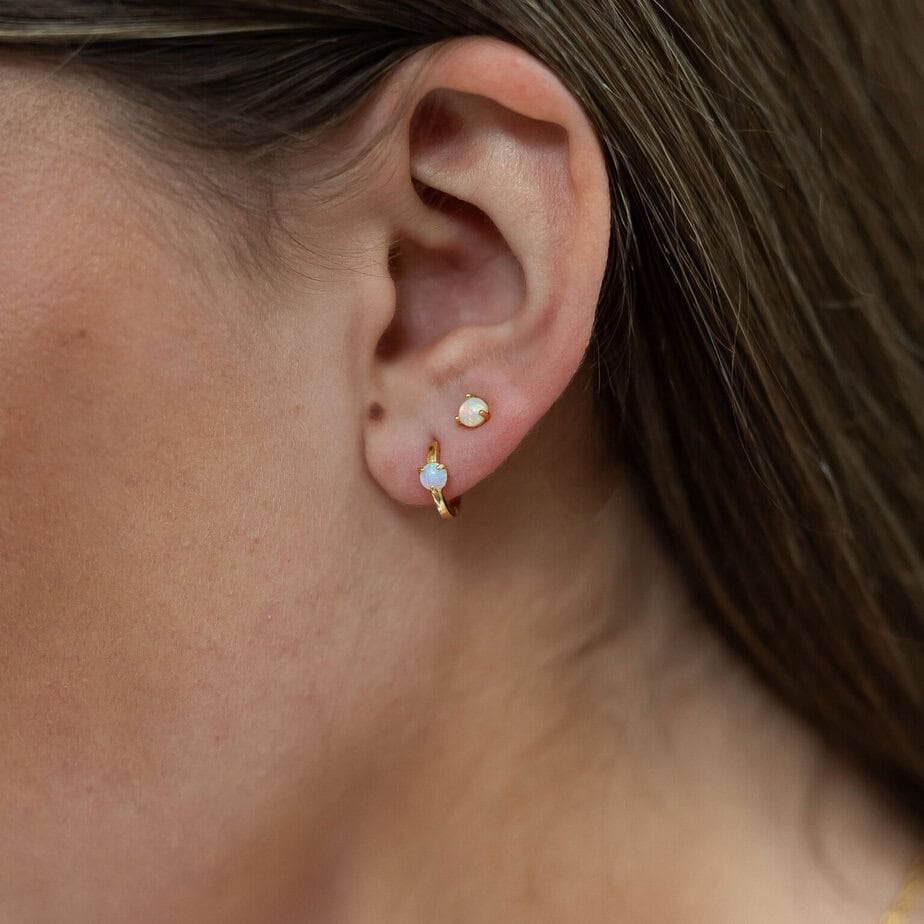
October birthday girls are spoilt for choice with these two stunning birthstones, but which is your favourite?
Explore our birthstone jewellery by month to find the perfect jewellery gift for birthdays, anniversaries and other special occasions.
The tradition of birthstone jewellery is rich in history, symbolism and cultural meaning, with origins often traced back to ancient times. Many historians link the concept of birthstones to the Breastplate of Aaron, described in the Book of Exodus in the Bible. This ceremonial breastplate was set with twelve gemstones, each representing the twelve tribes of Israel and believed to hold spiritual significance and protective powers.
Centuries later, these twelve stones became associated with the twelve months of the year and the zodiac signs. By the 8th and 9th centuries, it is thought that people owned collections of birthstone gemstones and wore a different stone each month, believing it would bring heightened protection, strength or good fortune during that time.
By the 16th century, this practice was widely recorded in Poland, where wearing the gemstone linked to the current month was believed to enhance its power. Over time, this evolved into the more familiar tradition of wearing a single birthstone to represent the month of birth.
The modern list of birthstones was standardised in 1912 by the National Association of Jewellers, creating the foundation for the birthstone jewellery we recognise today. While there are still ancient, traditional and modern variations, many gemstones appear across multiple lists — allowing for flexibility in choice based on personal style, colour preference and meaning.
Today, birthstone jewellery remains a popular and enduring way to celebrate identity, mark milestones and give a gift with lasting significance.
Birthstones by month plus durability and Mohs Hardness explained.
| Month | Modern | Traditional | Mohs Hardness* |
| January | Garnet | Garnet | 7 – 7.5 |
| February | Amethyst | Amethyst | 7 |
| March | Aquamarine | Bloodstone | 7.5 – 8 (aquamarine) |
| April | Diamond | Diamond | 10 |
| May | Emerald | Emerald | 7.5 – 8 |
| June | Alexandrite | Pearl and moonstone | 2 – 4 (pearl) |
| July | Ruby | Ruby | 9 |
| August | Peridot and spinel (added in 2016) | Sardonyx | 6.5 – 7 (peridot) |
| September | Sapphire | Sapphire | 9 |
| October | Tourmaline | Opal | 7 – 7.5 (tourmaline) 6 – 6.5 (turquoise) |
| November | Yellow or gold topaz or citrine | Topaz | 7 (citrine) |
| December | Blue zircon, Blue Topaz or Tanzanite | Turquoise or Lapis | 8 (blue topaz) 6 – 6.5 (turquoise) |
This ordinal scale from 1 to 10 characterises the scratch resistance of various minerals. It was created in 1822 by German geologist and mineralogist Friedrich Mohs.
It works by seeing which out of two natural minerals would scratch the other mineral visibly. Talc is at the softest end of the scale (1) and diamond at the hardest (10).
Using this scale is useful when creating pieces of jewellery that need to be more durable or to keep harder gemstones from scratching softer gems and metals used to set the pieces.