Free delivery for all UK orders over £40
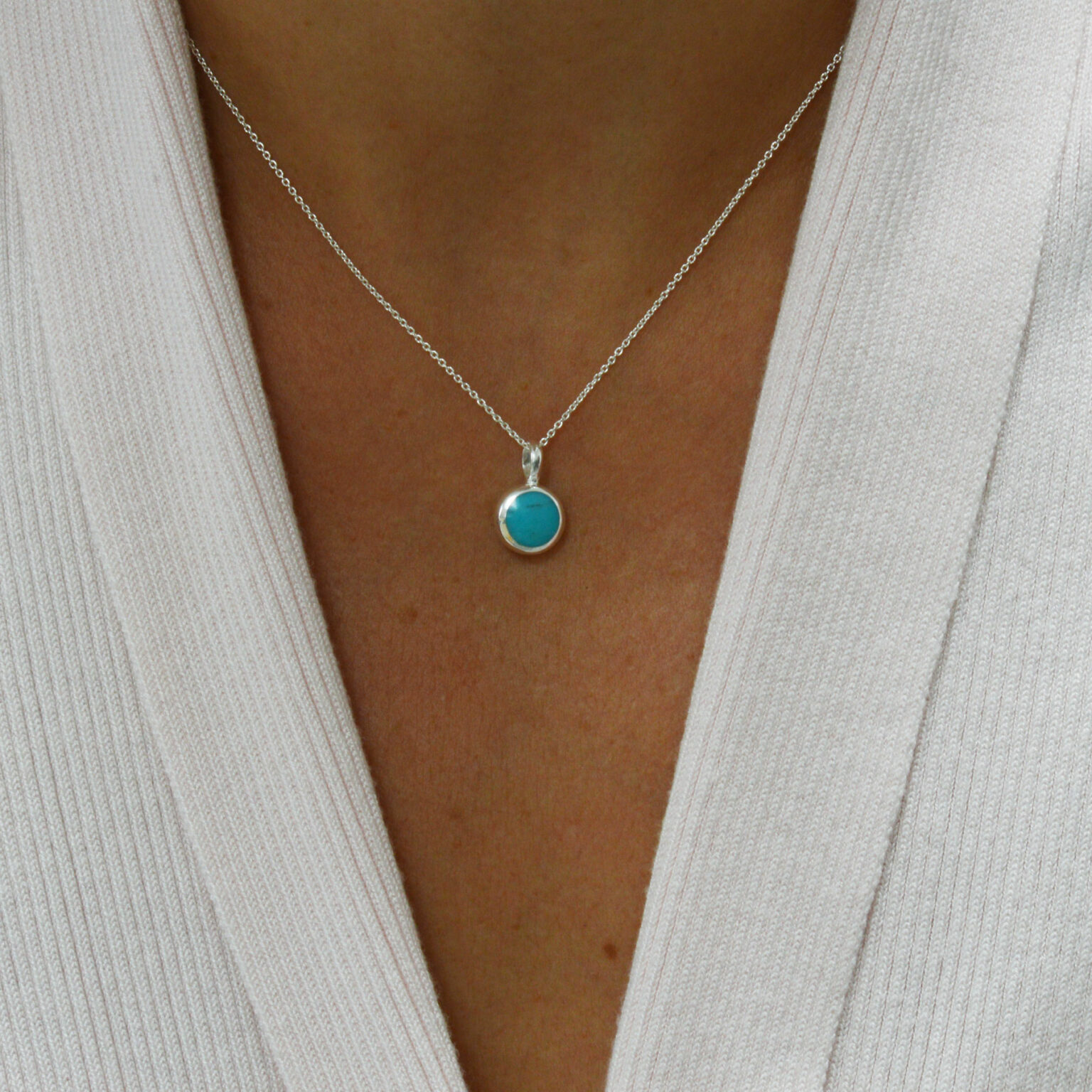
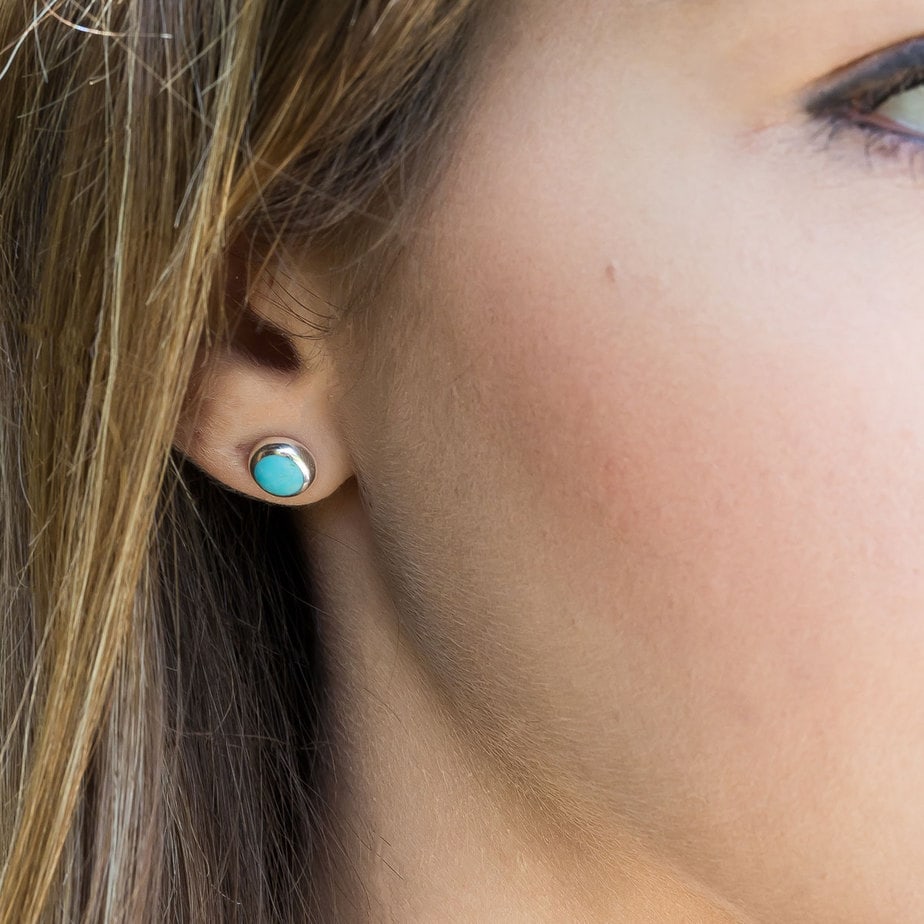
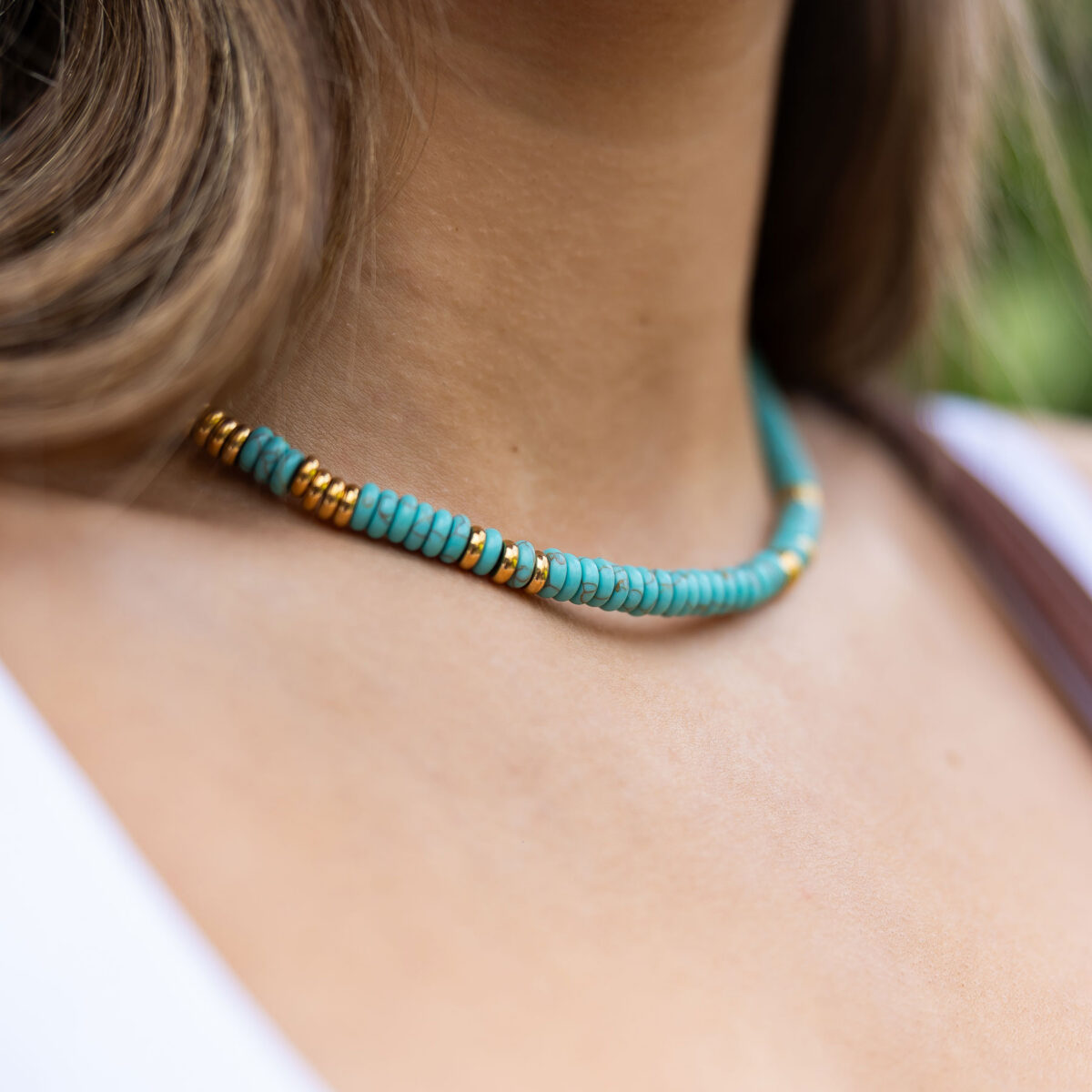
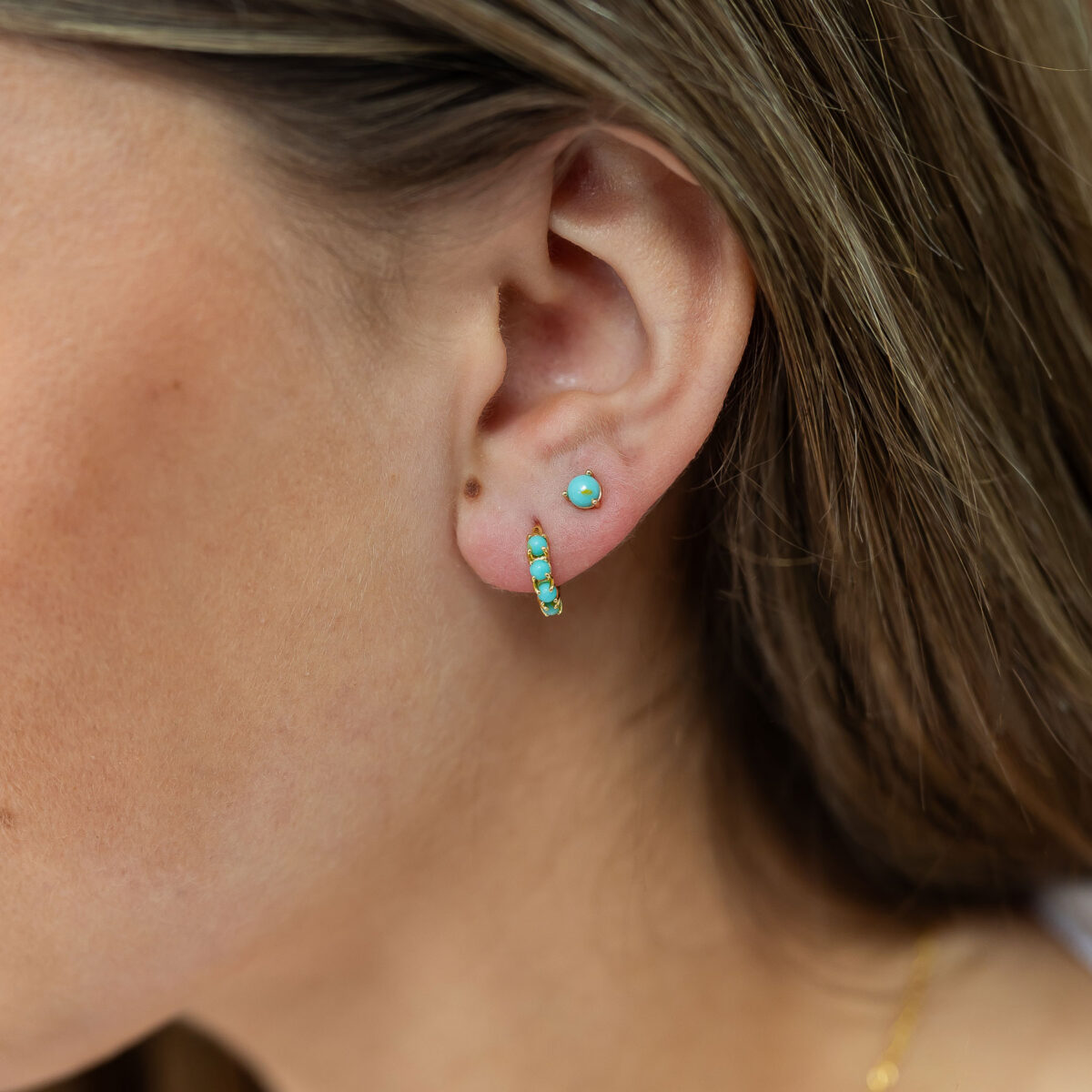
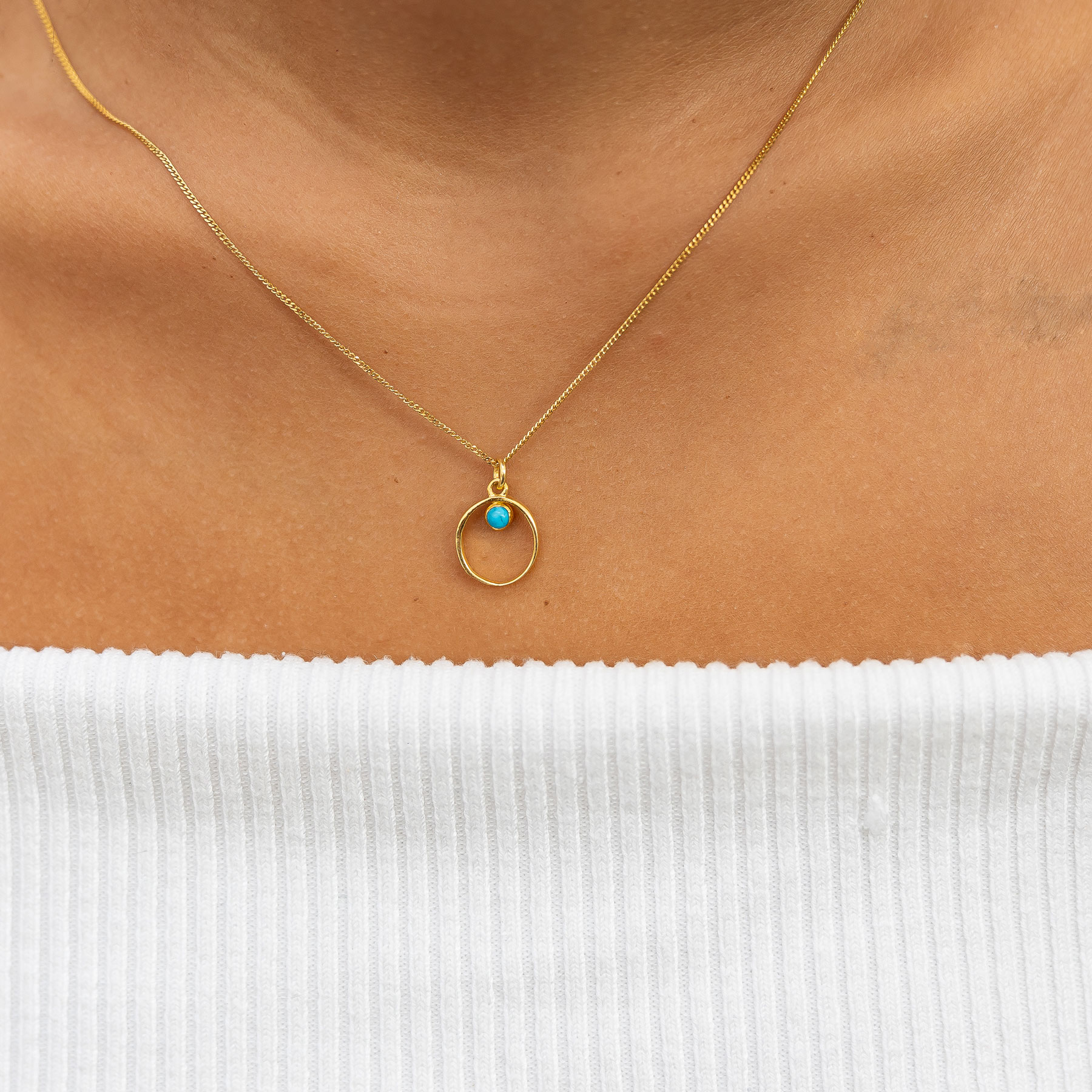
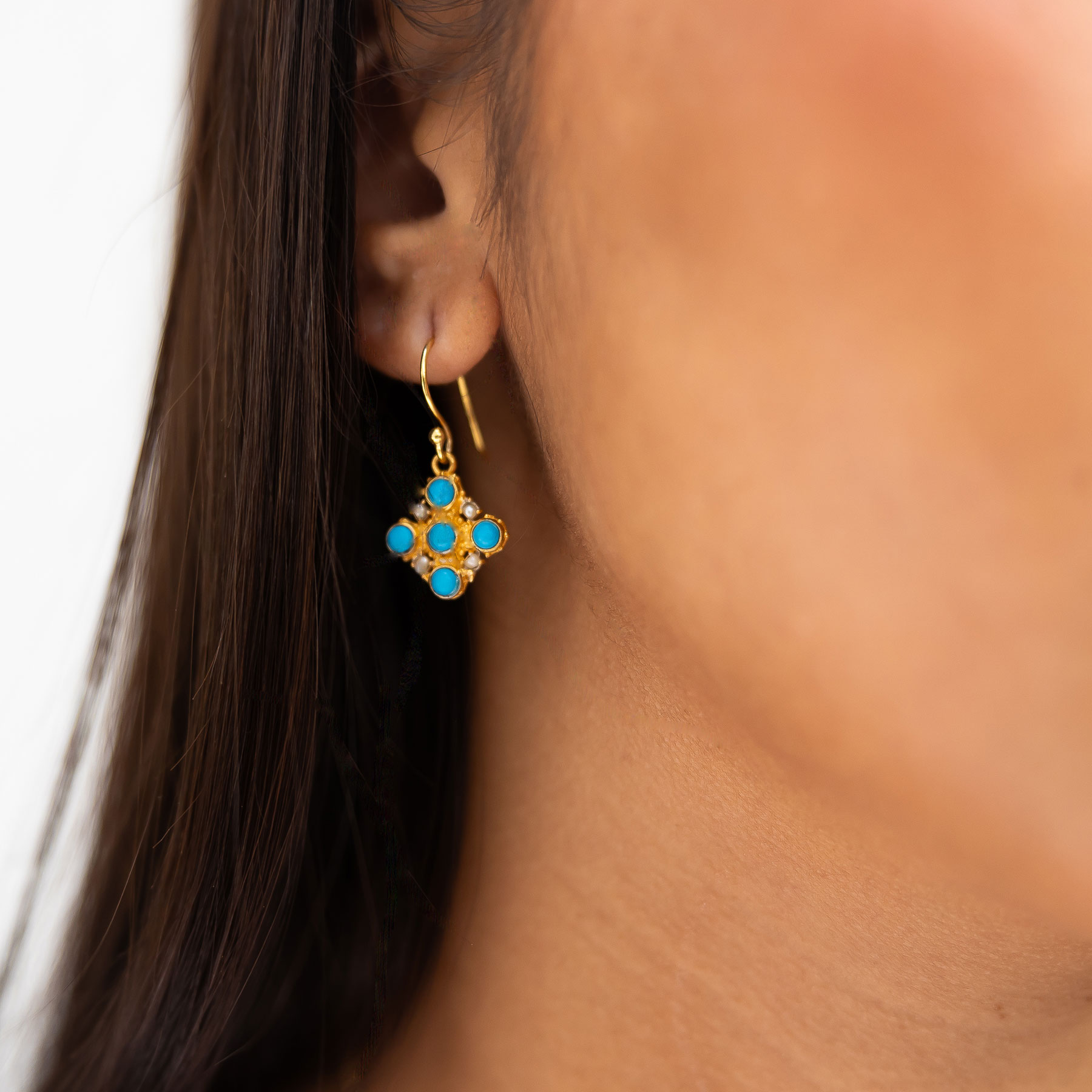
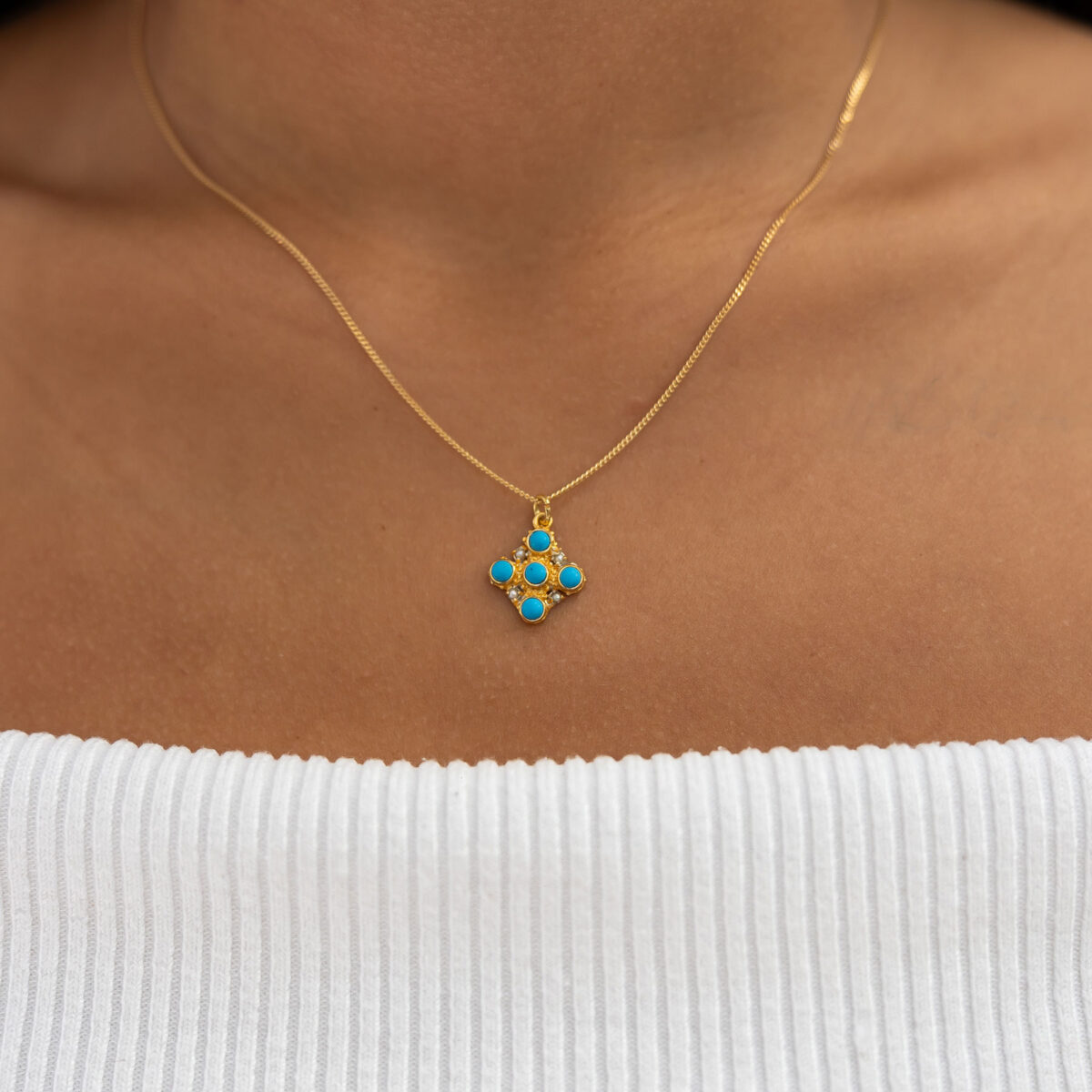
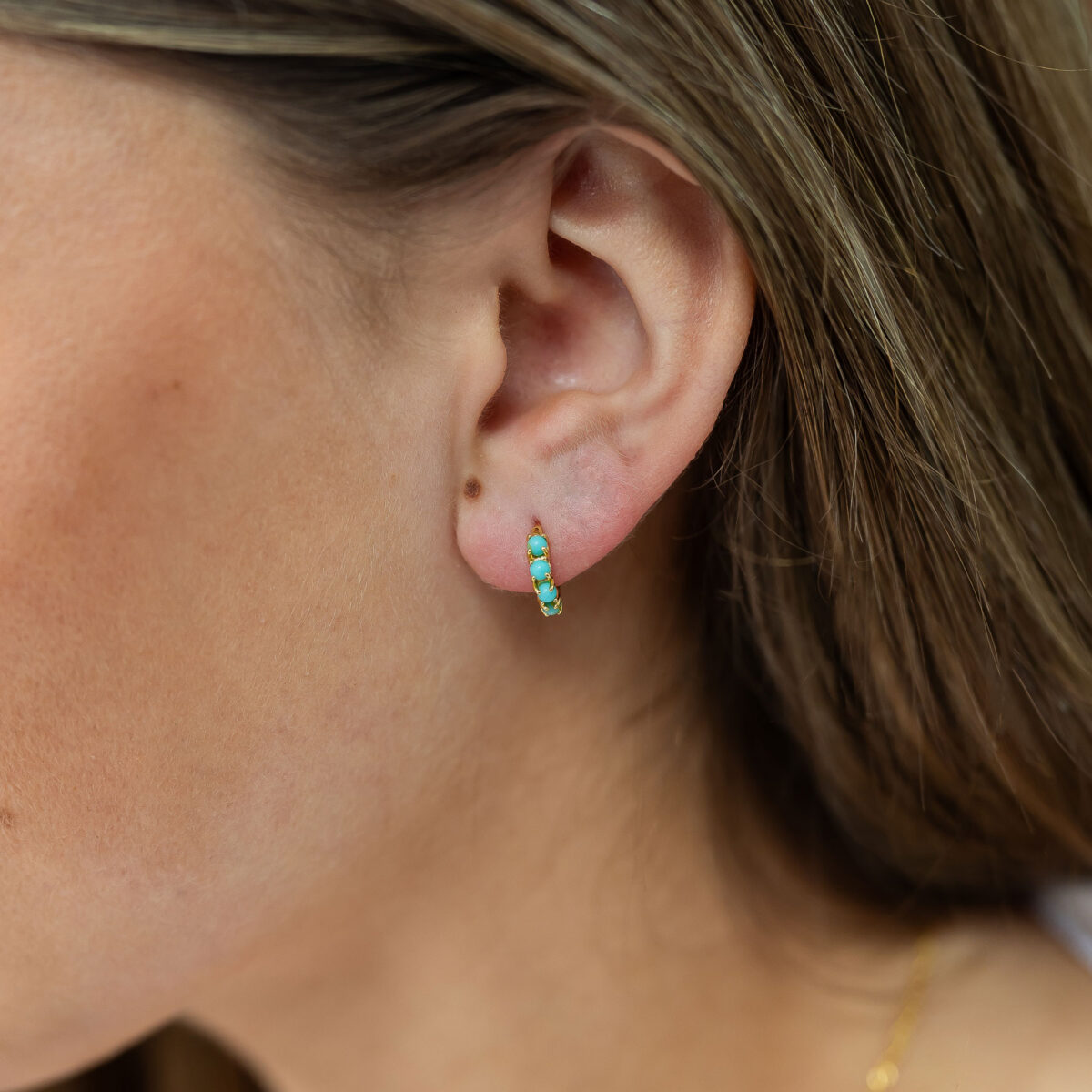
Turquoise, one of the world’s oldest gemstones, has long been associated with protection, calm and good fortune. As the December birthstone, turquoise jewellery is a distinctive and meaningful choice, perfect for celebrating birthdays, anniversaries and special occasions.
With its striking blue and green tones, turquoise offers a unique and characterful style. Whether you’re choosing a December birthstone gift or adding a bold pop of colour to your collection, turquoise jewellery remains both timeless and expressive.


Turquoise is typically recognised for its vibrant blue tones, although it can also range into green and blue-green hues. The most highly valued stones display an even sky-blue colour, sometimes described as ‘robin’s egg blue’ or ‘sky blue’.
Many turquoise stones feature natural veining, known as matrix, which forms patterns within the stone. Spiderweb turquoise, for example, is prized for its intricate, web-like markings. However, the most valuable turquoise is an even medium blue with no matrix.
Much of the turquoise used in jewellery today is treated to make it stable enough for cutting and jewellery making or to improve its colour. Reconstituted turquoise is made from smaller pieces of the stone, combined with resin and formed into blocks and sawn into smaller pieces for jewellery making. I offer a mix of natural turquoise stone jewellery and reconstituted turquoise pieces.
Turquoise has long been associated with protection, balance and wellbeing. Historically, it was believed to connect heaven and earth, offering a sense of grounding and calm.
It has also been linked to communication and self-expression, and is often considered a stone of peace, clarity and emotional balance.
Turquoise ranks between 5 and 6 on the Mohs hardness scale, making it softer than many gemstones and requiring a little extra care. To keep your turquoise jewellery looking its best:
– Store separately from harder gemstones
– Avoid contact with liquids, perfumes and cosmetics as it can be porous
– Clean gently with mild soap, rinse with water and dry with a soft cloth
As well as being one of the December birthstones, turquoise is traditionally given to celebrate an 11th wedding anniversary. Its distinctive colour and symbolic meaning make it a thoughtful and memorable gift.

Turquoise has been used in jewellery for thousands of years, with examples found in ancient Egyptian tombs dating back to 4000 BC. It was also widely used by Chinese artisans and is even the national gemstone of Tibet. It has long been associated with health, protection and good fortune.
In Persia, a highly prized sky-blue variety of turquoise was discovered and traded widely across Asia and Europe, giving rise to the term ‘Persian blue’.
Turquoise also played a significant role in Native American culture, where it was used in jewellery, amulets and ceremonial objects. Some tribes believed it could bring strength and protection, and even improve accuracy in hunting.
The word ‘turquoise’ comes from a French term meaning ‘Turkish’, possibly reflecting the routes by which the gemstone was introduced to Europe.
Turquoise became so widely recognised that its name was adopted into the English language to describe its distinctive blue-green colour.
Turquoise is an opaque gemstone, although very rare transparent or translucent turquoise crystal specimens do exist.
It’s formed in dry, arid regions where mineral-rich water deposits copper, which reacts with aluminium and phosphorus in the surrounding rock. Either the turquoise replaces the rock or the host rock will appear as matrix within the turquoise.
The greener tone is caused by small amounts of iron substituting for aluminium in the turquoise structure. The colour can also change when small amounts of iron or zinc substitute for copper.
Turquoise is found in locations around the world, including the south-western United States, China, Iran, Mexico and Chile. Different mines produce distinctive colours and patterns, such as the famous Sleeping Beauty Mine in Arizona, known for its clear blue stones, and the Kingman Mine, recognised for its bright blue stones with striking matrix patterns.