Free delivery for all UK orders over £40
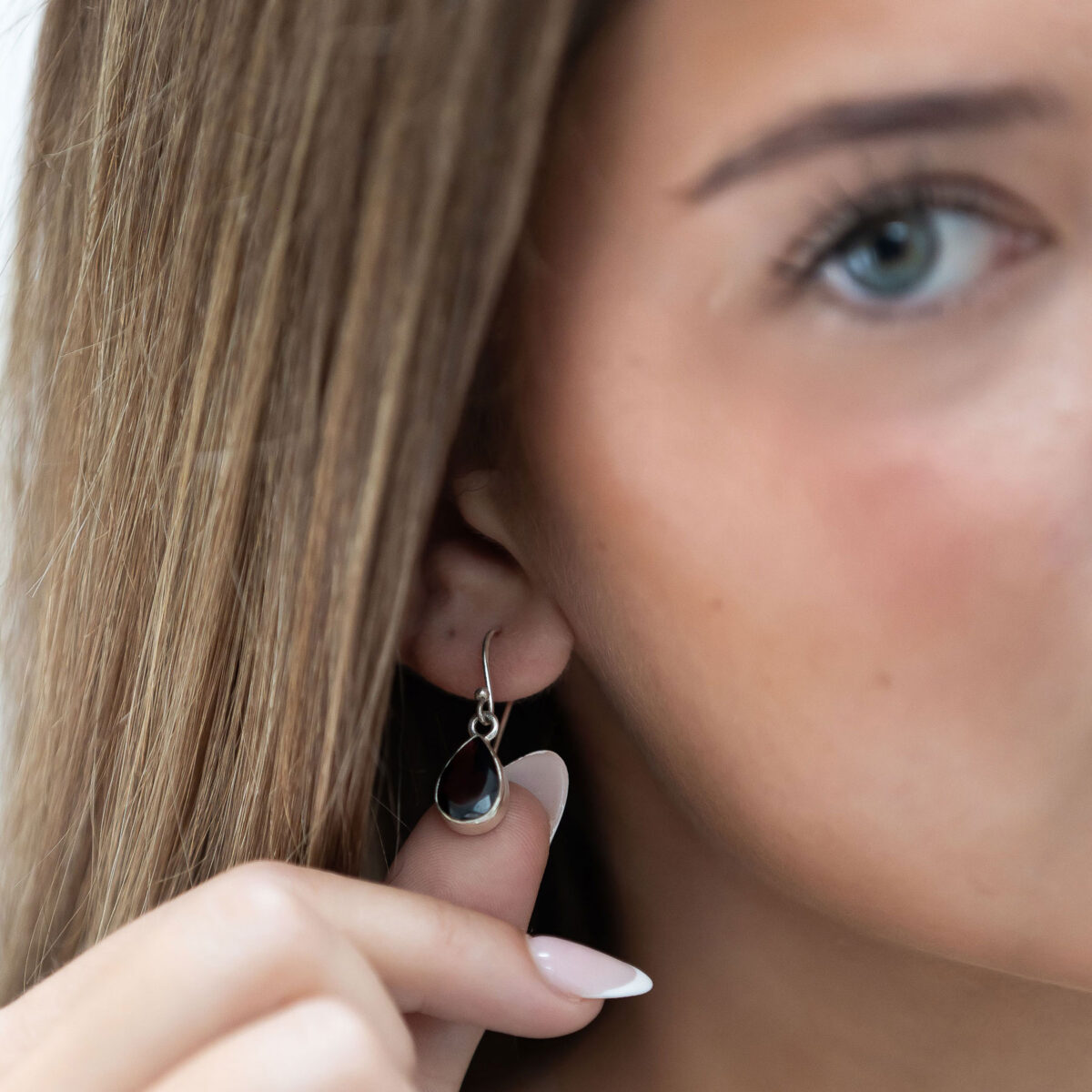
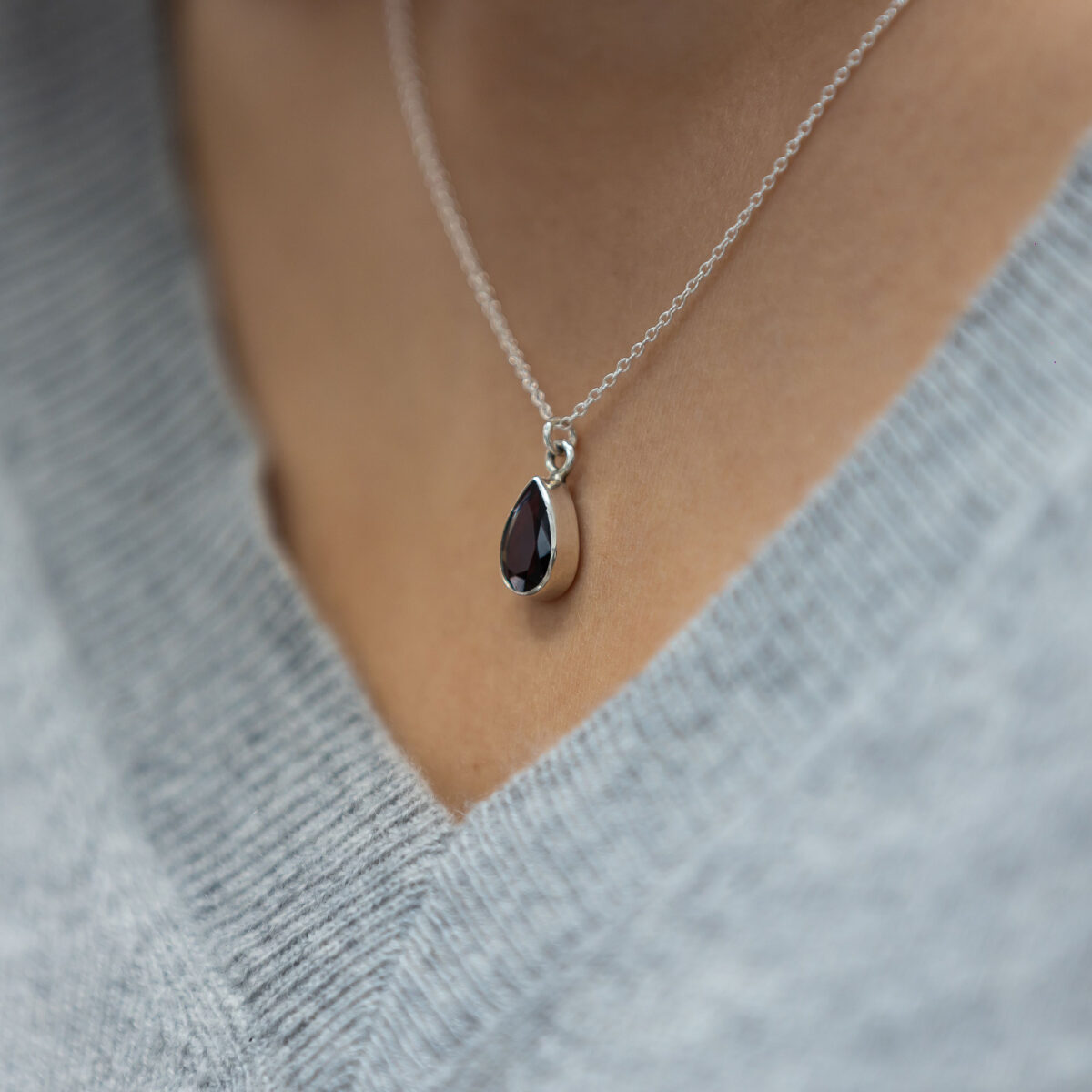
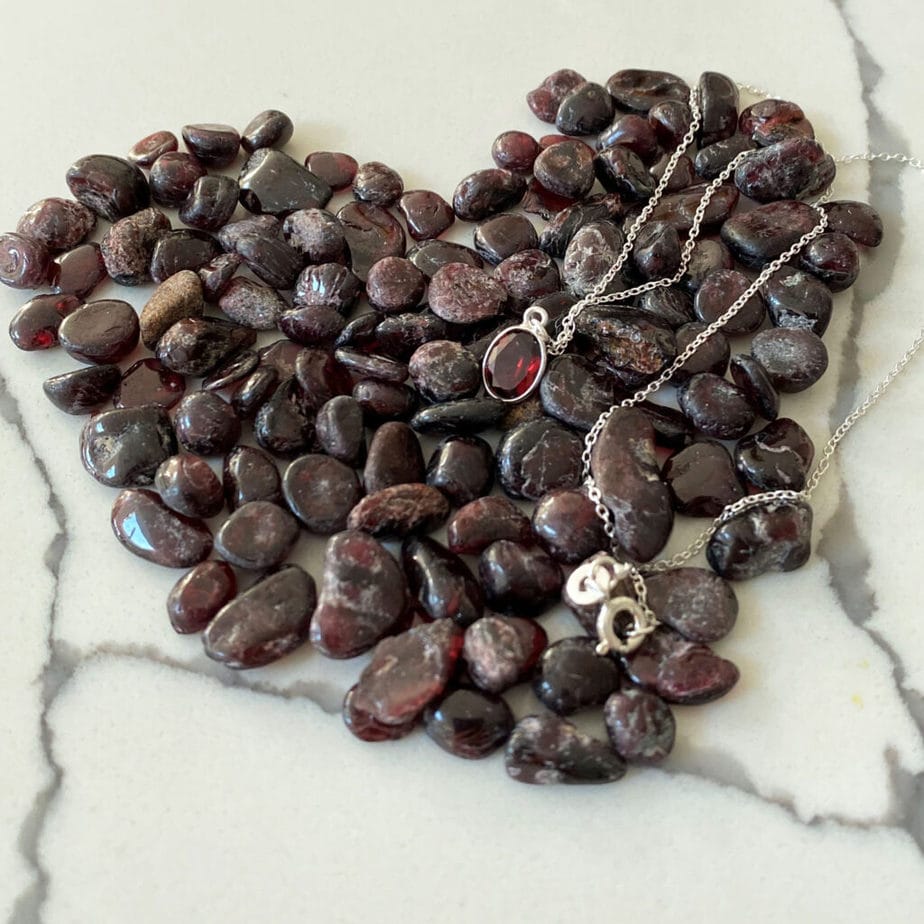
Garnet jewellery is a timeless and meaningful choice for January birthdays, symbolising love, loyalty and lasting connection. With its rich red tones and natural warmth, garnet has been treasured for centuries as a gemstone of strength and protection.
Whether you’re choosing a January birthstone gift or adding a deeper tone to your jewellery collection, garnet offers a classic yet distinctive style.
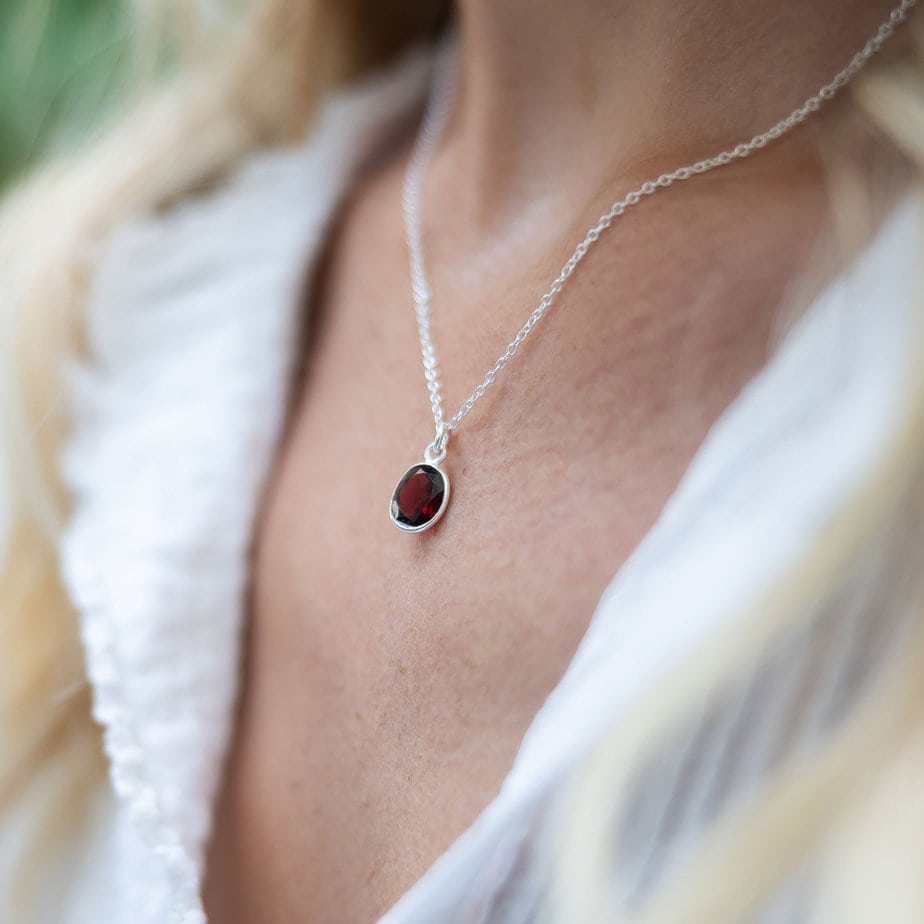
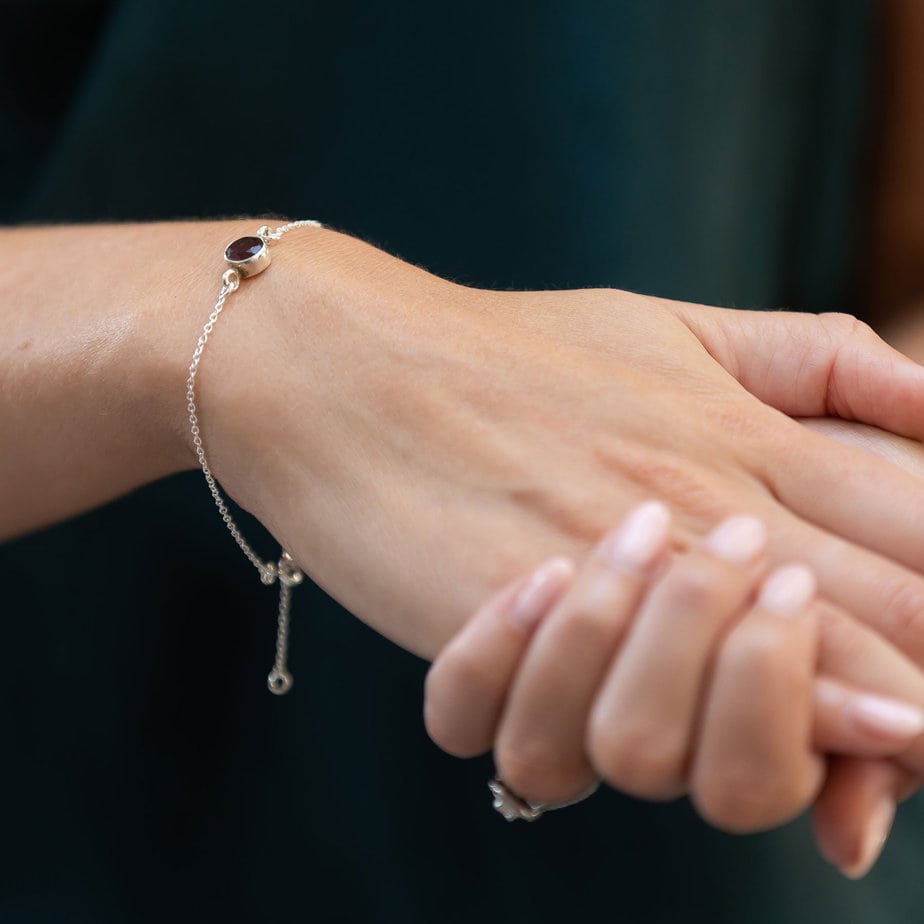
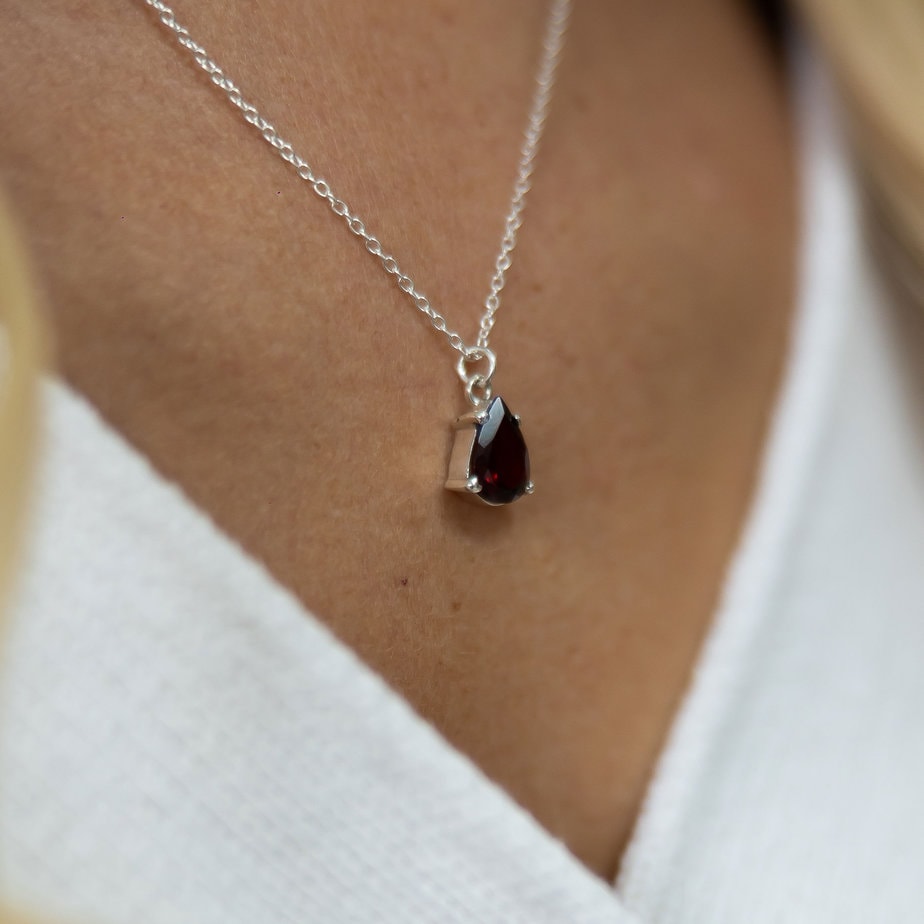
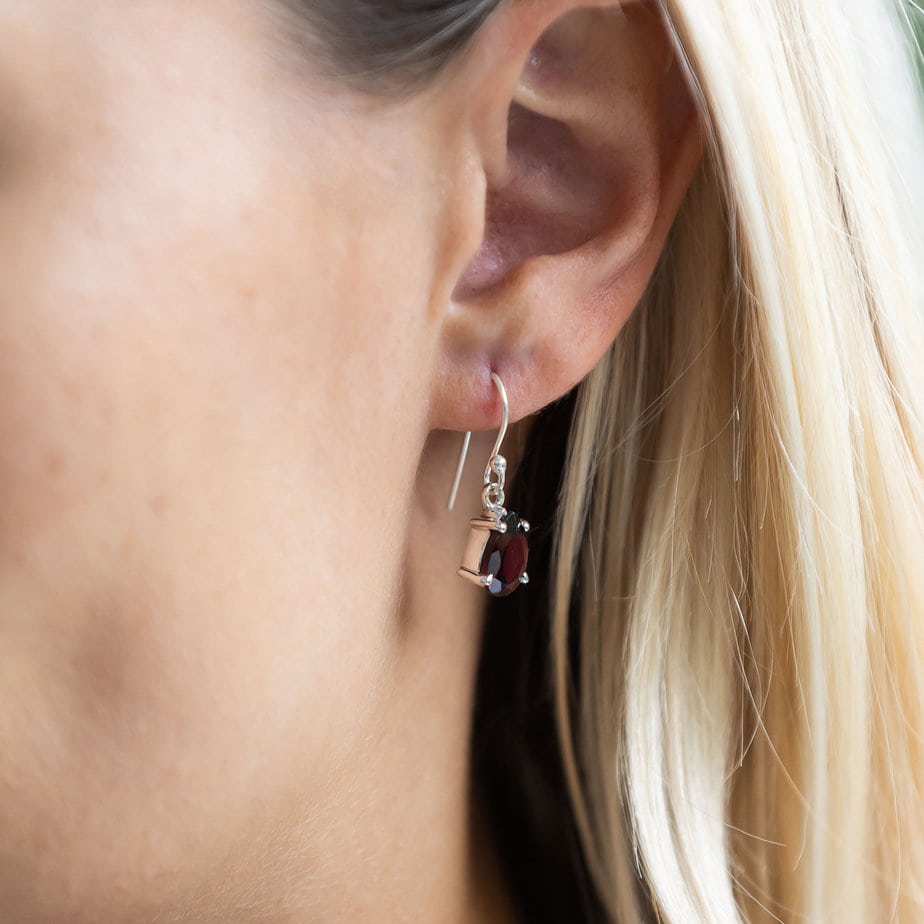
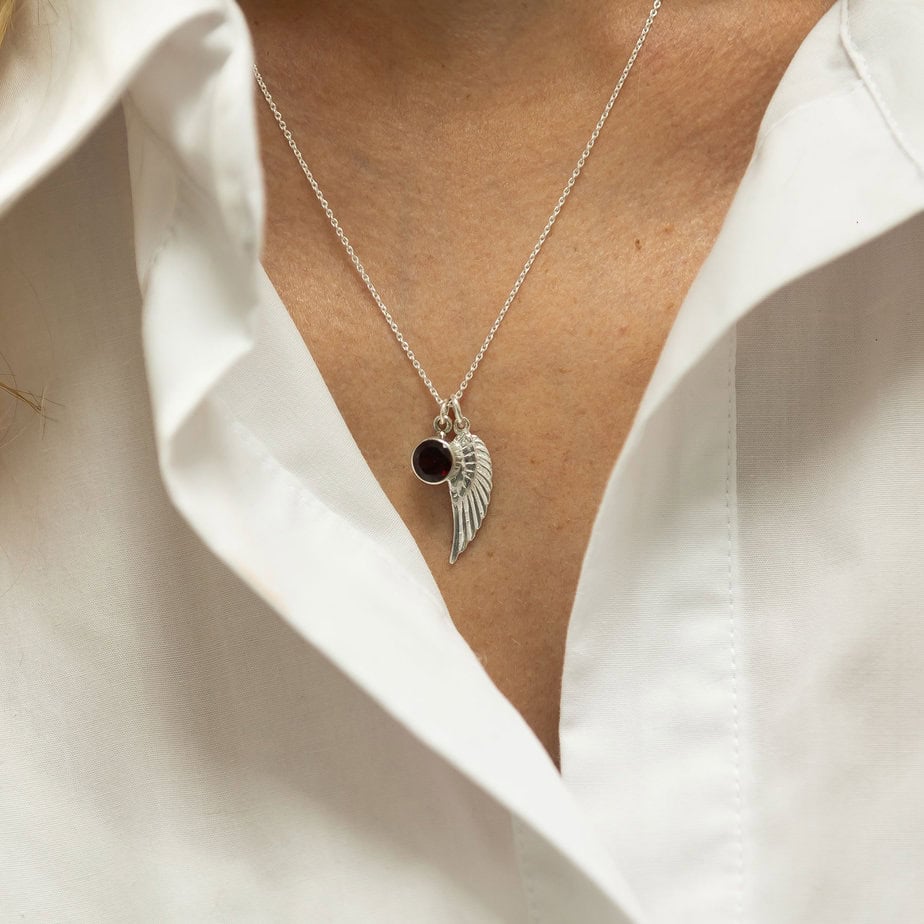
Explore our garnet birthstone jewellery collection to find stylish garnet necklaces, earrings and bracelets designed for everyday wear and thoughtful gifting.
Although garnet is most commonly recognised for its deep red colour, this fascinating gemstone actually exists in a wide spectrum of shades. Rather than being a single stone, garnet is a family of closely related minerals, making it one of the most diverse and versatile gemstones used in jewellery.
In contemporary jewellery design, garnet remains a popular choice thanks to its rich colour, natural brilliance and ability to complement both silver and gold-toned settings. The red variety is especially prized for its intensity and is often described by gemologists as having a distinctive inner ‘fire’.
Traditionally associated with love, energy and protection, garnet is believed to promote strength, vitality and emotional balance. Throughout history, it has been worn as a protective talisman, particularly by travellers and warriors who believed it offered safety and guidance.
Today, garnet jewellery is often chosen as a symbol of love, commitment and connection, making it a meaningful gift for birthdays, anniversaries and special occasions.
Garnet ranks between 6.5 and 7.5 on the Mohs hardness scale, making it suitable for everyday jewellery with a little care. To keep your garnet jewellery looking its best:
– Store pieces separately from harder gemstones to avoid scratches
– Avoid contact with harsh chemicals or abrasive surfaces
– Clean gently using a soft cloth, warm water and mild soap
With the right care, garnet jewellery will retain its colour and shine for years to come.
As well as the January birthstone, garnet is traditionally given to celebrate a second wedding anniversary. Its rich red colour makes a thoughtful and personal gift for romantic and milestone occasions.

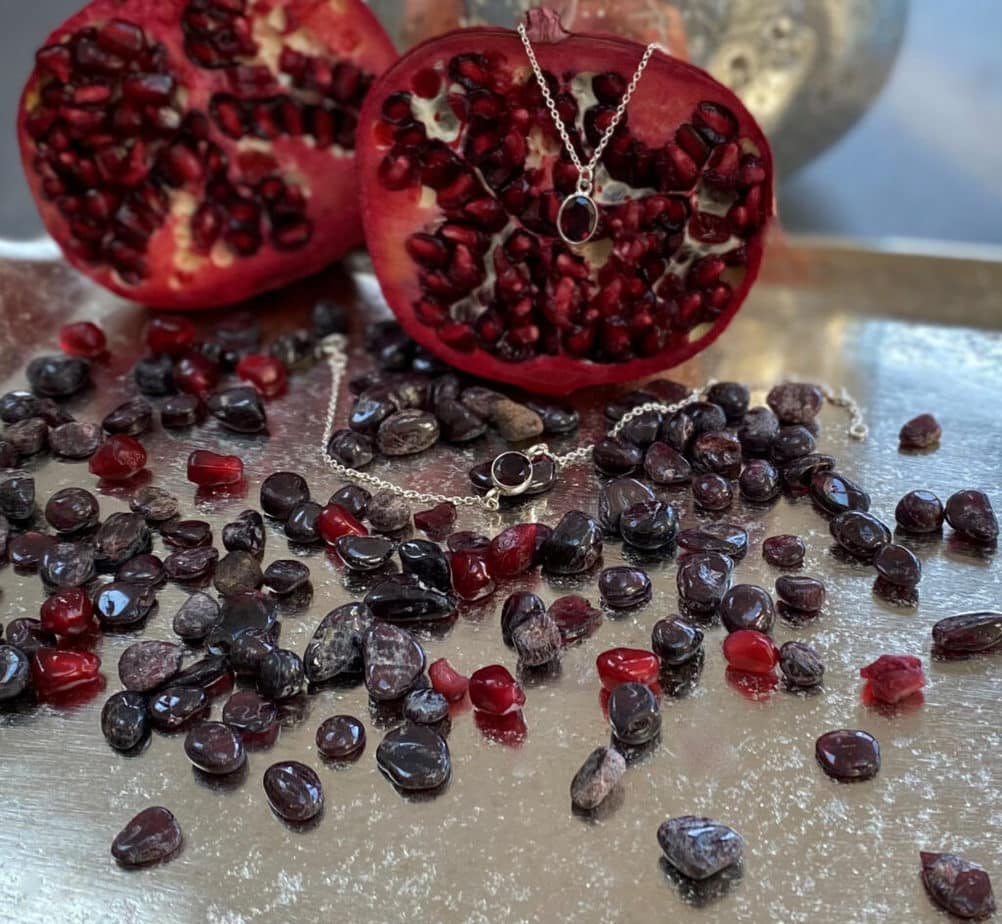
The name “garnet” is believed to come from the Middle English word gernet, meaning dark red, and is also be linked to the Latin granatus, meaning “seed-like”, a possible reference to the gemstone’s resemblance to pomegranate seeds.
Garnet has been used in jewellery since the Bronze Age. In ancient Egypt, pharaohs were adorned with garnet-set jewellery, while in ancient Rome, garnet signet rings were used to seal important documents. During the Middle Ages, garnet was favoured by clergy and nobility, and in ancient Persia, it was considered so valuable that only royalty were permitted to wear it.
One of the most famous examples of garnet jewellery is a Victorian-era pyrope garnet hair comb, now housed at the Smithsonian Institution. The piece features a large rose-cut garnet and smaller stones sourced from the historic mines of Bohemia (now part of the Czech Republic).
Throughout history, garnet has also been associated with protection and wellbeing. It was often worn as a talisman by travellers and was believed to promote strength, confidence and emotional balance.
Garnet is not a single gemstone but a group of closely related minerals that share similar physical properties but differ in chemical composition. This is what gives garnet its wide range of colours.
While the deep red varieties are the most widely recognised, garnet can also be found in shades of orange, yellow and green. Several varieties are used as gems:
– Pyrope and almandine – typically deep red to purple
– Spessartine – vibrant orange and yellow tones
– Grossular – ranging from colourless to green, including the bright green tsavorite which has a particularly high brilliance and few inclusions
– Andradite – including the highly prized green demantoid
Garnet is found in locations around the world. Historically, Bohemia was a key source of red garnets, particularly during the Victorian era. Green demantoid garnets were first discovered in Russia’s Ural Mountains in the 19th century – prized by the Russian royal family and used by the famous jeweller Fabergé. Today, many garnets come from Africa, including Namibia, Tanzania, Kenya and Madagascar. Tsavorite, the vivid green garnet, is found exclusively in the Tsavo region along the Kenyan and Tanzanian border. Additional sources include Brazil, India, Sri Lanka and parts of Asia and the Middle East.